


Definition WiFi DIN Rail Switch
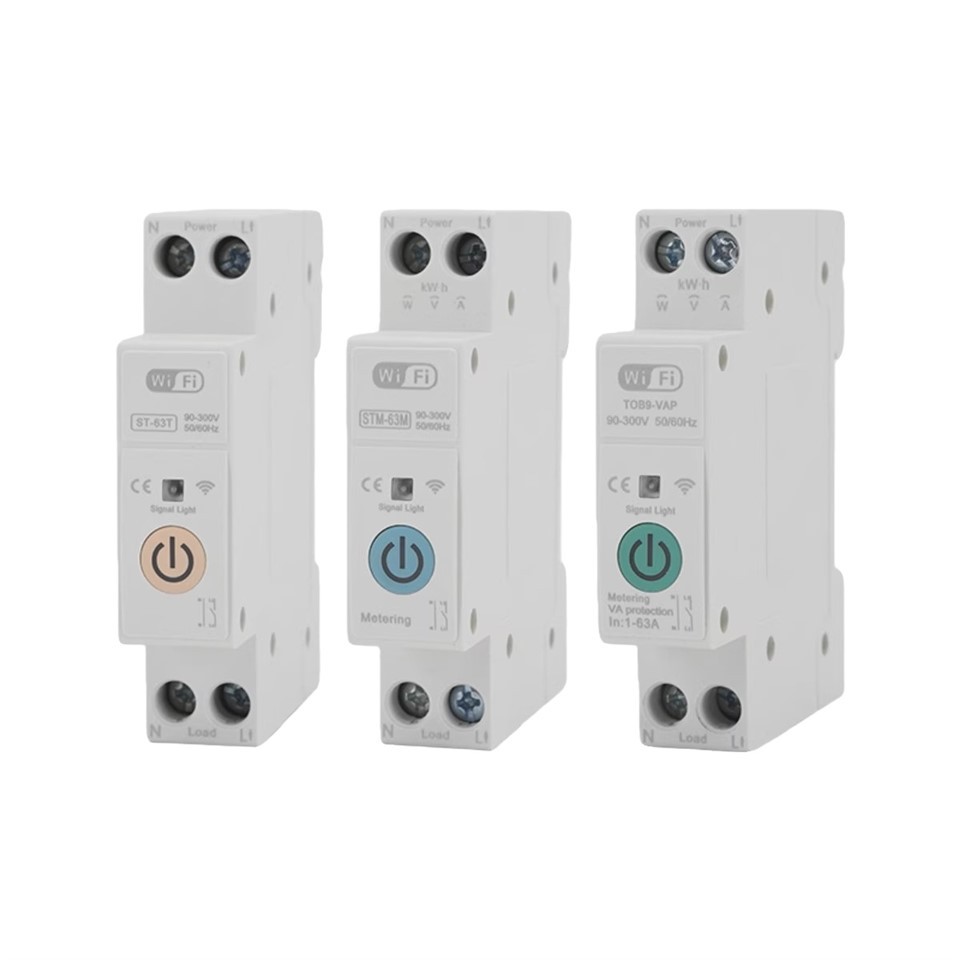
The WiFi DIN rail switch is a smart power management device that combines wireless communication capabilities,such as WiFi, with DIN rail installation Design. Its core functions include:
Power conversion: Converts alternating current to direct current, providing stable voltage (e.g. 12V, 24V, 48V) for industrial equipment.
Wireless communication: remote monitoring, configuration and control through the built-in WiFi module to support real-time feedback on device status and failure warning.
DIN rail installation: With standardized DIN rail design (e.g. 35mm wide track), it can be embedded directly in the control cabinet, saving space and facilitating maintenance.
Key application scenarios
Industrial automation
Power Monitoring: Provides stable power supply for PLC, sensor, driver, etc., and implements remote parameter adjustment and energy consumption monitoring through WiFi.
Distributed Control System: in multi-node automatic production line, the centralized management of power supply module is realized through wireless network, and the wiring complexity reduced.
Building automation
Intelligent Lighting and HVAC System: Power LED drives, air conditioning controllers, and support WiFi connectivity to building management platforms for on-demand adjustment and energy efficiency optimization.
Security monitoring: provides uninterrupted power supply for gated systems, closed-circuit television cameras, etc., and is integrated into the security network through wireless communications.
Energy management
Renewable energy systems: monitoring energy conversion efficiency and optimizing charging and discharging strategies for energy energy storage equipment in the case of solar or wind power generation.
Microgrid Control: through WiFi, realize coordinated operation of multiple power modules, improve the stability and response speed of distributed energy system.
Traffic
Railway Signal System: provides power to equipment along the railway line, supports real-time uploading of equipment status via wireless network, and reduces the cost of manual detection.
Electric vehicle charging station: set up the power management and communication function in one, realize remote monitoring of charging pile and connection with the billing system. Technical advantages
Efficient energy saving: switching power supply technology, conversion efficiency over 90%, reduced energy loss.
Flexible deployment: The wireless communication function eliminates the limitation of physical wiring and adapts to the need of dynamic adjustment.
Reliability is high: has overpressure, overload, short circuit and other protective functions to ensure the safe operation of equipment.