


The installation and subsequent maintenance requirements of passive lightning counter module mainly depend on the design principles and structural characteristics of passive lightning counter module. In general, their maintenance requirements are relatively low, but the following should be noted:
1.Points to note during installation
- Physical connection stability
- Ensure that contact resistance between counter and controlled conductor (e.g. lower pin of lightning rod) is less than specified (usually ≤ 0.1 omega).
- Installation should be located away from strong electromagnetic interference sources (such as power lines and frequency converters) to prevent the accuracy of the induction magnetic field interference count.
- Environmental adaptation
- Sealed design: If used outdoors or in a humid environment, the grade of protection of the module housing (e.g. IP65 or above) shall be confirmed to prevent moisture from entering and causing corrosion of internal components.
- Temperature range: Check the operating temperature range (e.g. -40°C to +85°C) to ensure that it works properly in extreme weather conditions.
2. Long-term operation and maintenance requirements
- No periodic calibration required
- Passive counters rely on electromagnetic induction and signal processing does not involve electronic components. Therefore, they do not require regular sensor calibration or parameter adjustment as active devices do.
- However, it is necessary to regularly inspect the physical connection state (e.g., the tightness of bolts and the ageing of wires) to prevent increased contact resistance due to mechanical loosening.
- Simple cleaning and checking
- Cleaning: Wipe the shell with a dry, soft cloth to avoid using chemical detergents that may corrode the seal.
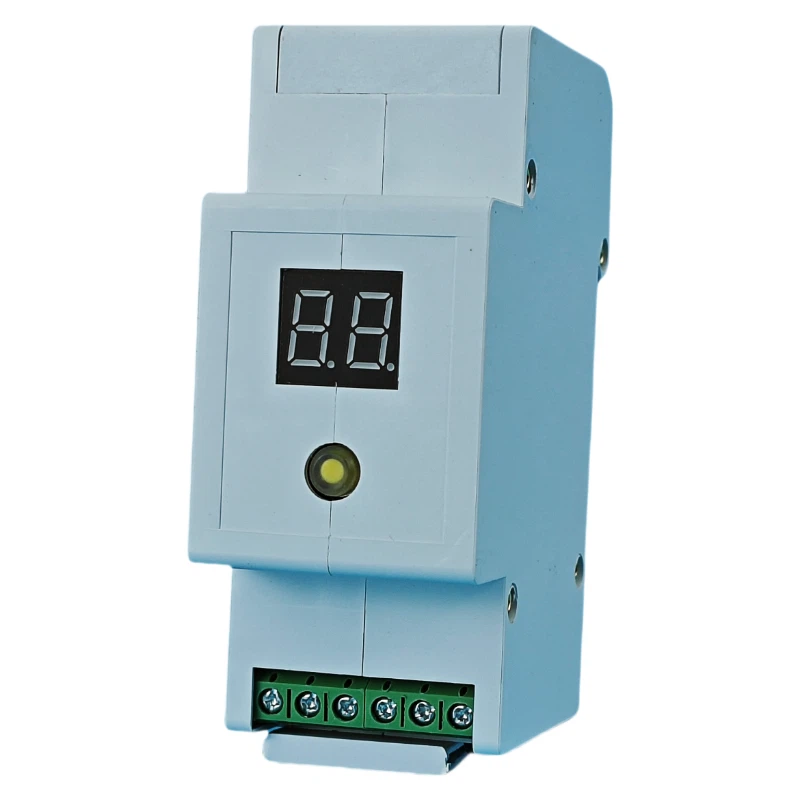
- Visual inspection: check every 1-2 years for cracks and distortions in the module's appearance and whether the indicator lights,if any, is working.
- Functional testing: Verify the counting function by simulating a lightning stream,such as using a dedicated tester, but this must be done by a professional.
3. Troubleshooting and replacement
- Common glitches
- Leakage: Leakage may be due to high contact resistance or lightning current intensity below module detection threshold (e.g. < 1kA).
- Myth Note: It may be caused by electromagnetic interference from nearby high current equipment such as welders.
- Complete failure: usually caused by a physical injury (such as a cracked shell, internal component detachment).
- Replacement principle
- If module malfunctions or reaches its design useful life (usually more than 10 years), direct replacement rather than repair is recommended. This is because passive modules are simple in structure and maintenance costs can be close to replacement costs.