


The core difference between passive lightning counters counter and active lightning counters lies in four aspects: working principle, power supply mode, performance characteristics and application scenario. The specific analysis is as follows:
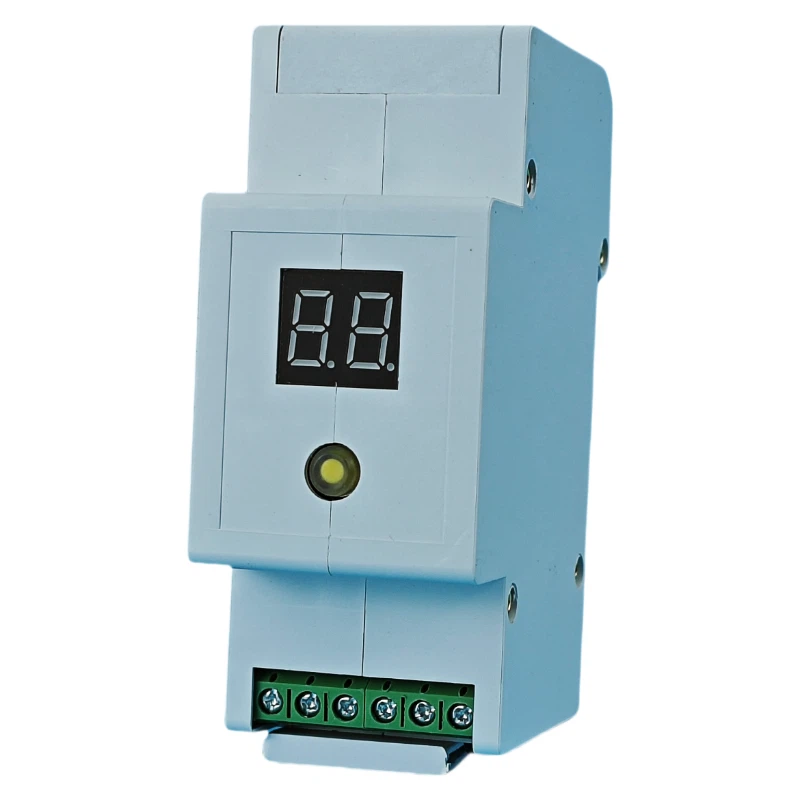
Passive Lightning Counter Module
1.Differences in working principles
Passive (passive)
Electromagnetic induction drive: Instant electromagnetic field change caused by lightning passing through a conductor without the need for external sensors or electronic components. For example, when lightning current passes through a lightning rod, the induction coil inside the counter detects changes in the magnetic field and records the event.
Simple: it relies entirely on physical sensing, has no signal amplification or processing, and is structured like a mechanical counter.
Incumbent (active)
Electronic sensors + signal processing: high-precision sensors (e.g. Hall element, shunt resistors) are used to detect lightning current. The signal is amplified, filtered and analyzed in combination with amplifiers, processors and other electronic components, and finally the count is triggered.
Multi-parameter recording: Some models can simultaneously record data such as lightning strike time, current peaks and waveforms to support complex analysis.
2.Comparison of power supply methods
Passive
No external power supply required: works entirely on electromagnetic energy generated by lightning. Power outages or power failures do not affect its function.
Simple to maintain: no batteries or power module are required, and almost no maintenance is required after installation.
Active activities
3. Dependence on external sources of power supply: Usually powered by batteries, solar or external sources, a stable supply of power is needed to avoid data loss.
High maintenance costs: Power status needs to be checked regularly. Replacement or charging can add to the operating and maintenance burden.
3. Differentiation of applicable scenarios
Passive (passive)
Areas where power supply is not readily available: such as remote mountain areas, outdoor facilities or areas where power supply is unstable.
Low accuracy requirements: Scenarioss where the number of lightning strikes is calculated without detailed data analysis (e.g., small buildings and temporary facilities).
Long-term stable operation: no maintenance, suitable for unattended environment (e.g. wind farms, photovoltaic plant, etc.).
Incumbent (active)
Critical infrastructure: areas such as electricity, communications, rail transit, etc., that require accurate monitoring of lightning strike intensity.
High-risk areas: Petrochemical tank farms, oil and gas pipelines and other places with high explosion prevention requirements, real-time warning and rapid emergency response.
Intelligent management: needs to be integrated with the SCADA system and lightning protection monitoring platform to realize remote data analysis and operation maintenance scenario.