


As a supplier of K Split Current Transformers, I often encounter inquiries about the magnetic core materials used in these essential electrical devices. Understanding the magnetic core material is crucial as it directly impacts the performance, accuracy, and suitability of the current transformer for various applications. In this blog, I'll delve into the magnetic core materials of K Split Current Transformers, their properties, advantages, and how they contribute to the overall functionality of the product.
What is a K Split Current Transformer?
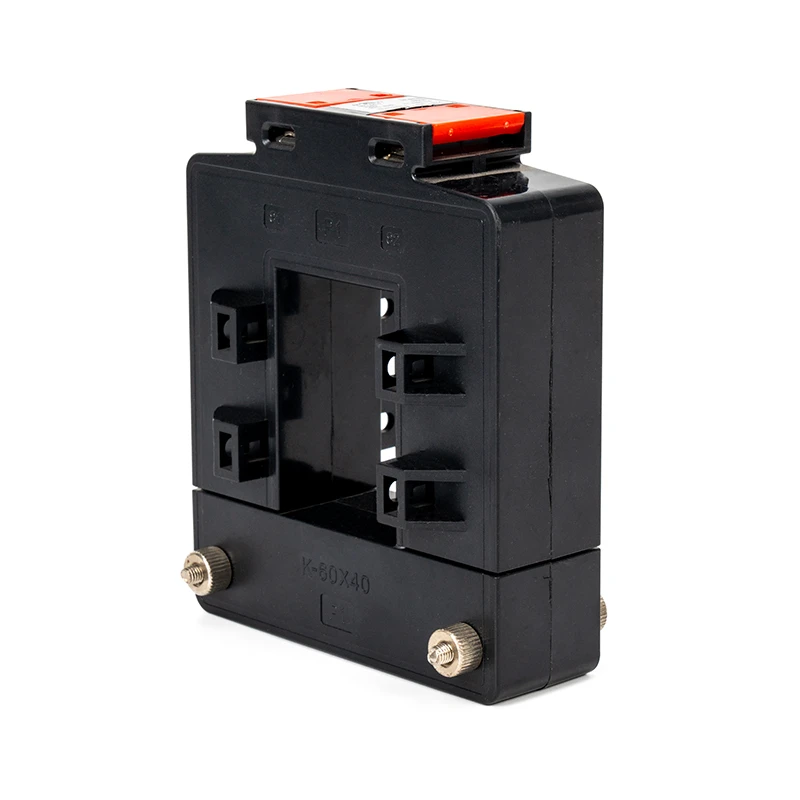
Before we explore the magnetic core materials, let's briefly understand what a K Split Current Transformer is. A K Split Current Transformer is a type of current transformer designed for easy installation and measurement of electrical current in existing circuits. The "split" design allows it to be opened and clamped around a conductor without the need to disconnect the circuit, making it a convenient choice for retrofit applications, maintenance, and monitoring tasks.
Common Magnetic Core Materials
Several magnetic core materials are used in K Split Current Transformers, each with its unique characteristics and applications. The most common materials include:
1. Silicon Steel
Silicon steel, also known as electrical steel, is one of the most widely used magnetic core materials in current transformers. It is an alloy of iron and silicon, with silicon content typically ranging from 1% to 4.5%. The addition of silicon improves the electrical resistivity of the steel, reducing eddy current losses and improving the efficiency of the transformer.
Properties and Advantages
- High Magnetic Permeability: Silicon steel has high magnetic permeability, which means it can easily magnetize and demagnetize. This property allows the current transformer to accurately measure the current flowing through the conductor.
- Low Core Losses: The high electrical resistivity of silicon steel reduces eddy current losses, resulting in lower core losses and improved energy efficiency.
- Good Thermal Stability: Silicon steel has good thermal stability, which means it can maintain its magnetic properties over a wide range of temperatures. This makes it suitable for use in various environmental conditions.
Applications
Silicon steel is commonly used in power distribution systems, industrial applications, and electrical metering. It is suitable for both low and high current applications, making it a versatile choice for K Split Current Transformers.
2. Amorphous Metal
Amorphous metal, also known as metallic glass, is a relatively new magnetic core material that has gained popularity in recent years. It is produced by rapidly cooling a molten metal alloy, resulting in a non-crystalline structure.
Properties and Advantages
- Extremely Low Core Losses: Amorphous metal has extremely low core losses compared to silicon steel, making it highly energy-efficient. This property is particularly beneficial in applications where energy savings are a priority.
- High Magnetic Permeability: Similar to silicon steel, amorphous metal has high magnetic permeability, allowing for accurate current measurement.
- Good Frequency Response: Amorphous metal has a good frequency response, which means it can accurately measure current over a wide range of frequencies. This makes it suitable for use in applications where the current contains harmonics or other high-frequency components.
Applications
Amorphous metal is commonly used in high-efficiency power transformers, renewable energy systems, and energy-saving applications. It is also suitable for use in K Split Current Transformers where energy efficiency and accurate current measurement are critical.
3. Ferrite
Ferrite is a ceramic material composed of iron oxide and other metal oxides, such as manganese, zinc, or nickel. It is a type of soft magnetic material that has high magnetic permeability and low electrical conductivity.
Properties and Advantages
- High Magnetic Permeability: Ferrite has high magnetic permeability, which allows it to easily magnetize and demagnetize. This property makes it suitable for use in high-frequency applications.
- Low Eddy Current Losses: The low electrical conductivity of ferrite reduces eddy current losses, making it energy-efficient.
- Good Temperature Stability: Ferrite has good temperature stability, which means it can maintain its magnetic properties over a wide range of temperatures. This makes it suitable for use in various environmental conditions.
Applications
Ferrite is commonly used in high-frequency applications, such as telecommunications, electronics, and power supplies. It is also suitable for use in K Split Current Transformers where high-frequency response and low core losses are required.
Choosing the Right Magnetic Core Material
The choice of magnetic core material for a K Split Current Transformer depends on several factors, including the application requirements, operating conditions, and cost. Here are some considerations when choosing the right magnetic core material:
1. Application Requirements
The application requirements, such as the current range, frequency range, and accuracy requirements, will determine the suitable magnetic core material. For example, if the application requires high accuracy and low core losses, amorphous metal or silicon steel may be the best choice. If the application requires high-frequency response, ferrite may be more suitable.
2. Operating Conditions
The operating conditions, such as temperature, humidity, and vibration, will also affect the choice of magnetic core material. For example, if the transformer will be used in a high-temperature environment, a magnetic core material with good thermal stability, such as silicon steel or amorphous metal, may be required.
3. Cost
The cost of the magnetic core material is also an important consideration. Silicon steel is generally the most cost-effective option, while amorphous metal and ferrite are more expensive. The choice of magnetic core material will depend on the budget and the specific requirements of the application.
Our K Split Current Transformers
At our company, we offer a wide range of K Split Current Transformers with different magnetic core materials to meet the diverse needs of our customers. Our CHK-0.66/K Split Current Transformer is designed for easy installation and accurate current measurement in low-voltage applications. It features a high-quality silicon steel core, which provides high magnetic permeability and low core losses.
We also offer DP Split Current Transformer and NEW DP Current Transformers with different magnetic core materials, including amorphous metal and ferrite. These transformers are suitable for a wide range of applications, including power distribution, industrial automation, and energy management.
Contact Us for Procurement and Consultation
If you are interested in our K Split Current Transformers or have any questions about the magnetic core materials, please feel free to contact us. Our team of experts will be happy to assist you in choosing the right product for your application and provide you with detailed technical information and support.

References
- Grover, F. W. (1946). Inductance Calculations: Working Formulas and Tables. Dover Publications.
- Chapman, S. J. (2012). Electric Machinery Fundamentals. McGraw-Hill Education.
- Tertian, J. (2017). Power Electronics: Converters, Applications, and Design. Wiley.