


Hey there! As a supplier of Split Current Transformers, I've spent a ton of time diving into the nitty - gritty details of these nifty devices. One aspect that often gets overlooked but is super important is the phase angle and its influence on the measurement of a split current transformer.
Let's start by quickly going over what a split current transformer is. It's a type of current transformer that can be easily installed around a conductor without having to disconnect the conductor itself. This makes it incredibly convenient for a whole bunch of applications, like monitoring electrical loads in buildings, industrial settings, and even in power distribution systems.
Now, what's the phase angle? In simple terms, the phase angle is the difference in phase between the primary current (the current flowing through the conductor) and the secondary current (the current output from the transformer). In an ideal world, the phase angle would be zero. But in reality, that's not always the case.
The phase angle can have a pretty significant impact on the measurement accuracy of a split current transformer. When the phase angle deviates from zero, it can introduce errors in the measurement of current. These errors can be a real headache, especially in applications where precise current measurement is crucial.
For instance, in power quality analysis, accurate current measurement is essential. If the phase angle is off, the calculated power factor can be incorrect. The power factor is a measure of how effectively electrical power is being used. A wrong power factor reading can lead to inaccurate billing, inefficient energy usage, and even potential damage to electrical equipment.
Let's talk about some of the factors that can affect the phase angle in a split current transformer. One major factor is the core material. Different core materials have different magnetic properties, which can influence the phase shift between the primary and secondary currents. For example, some high - quality core materials can minimize the phase angle error, resulting in more accurate measurements.
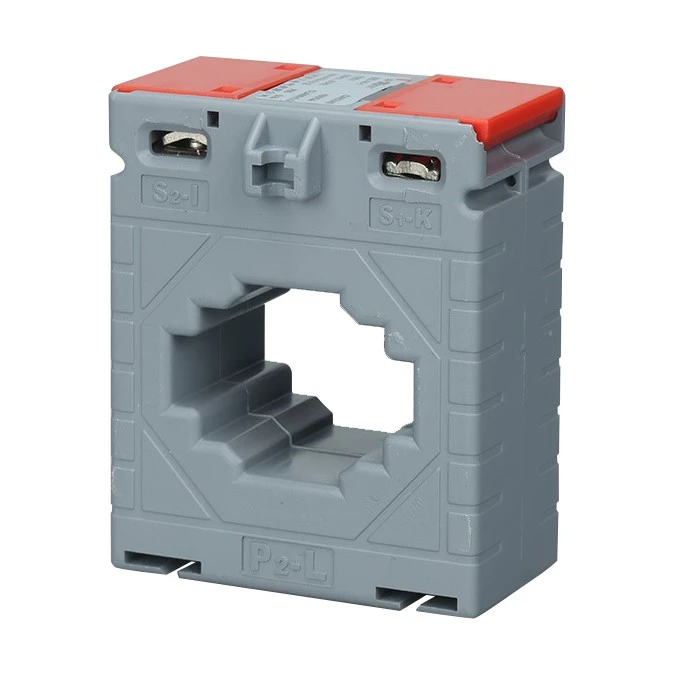
Another factor is the load impedance. The impedance of the load connected to the secondary side of the transformer can change the phase angle. If the load impedance is too high or too low, it can cause the phase angle to deviate from the ideal value. This is why it's so important to carefully select the appropriate load impedance for your split current transformer.

The design of the transformer itself also plays a role. The number of turns in the primary and secondary windings, the winding configuration, and the physical layout of the transformer can all affect the phase angle. A well - designed split current transformer will be optimized to minimize phase angle errors.

Now, let's look at how these phase angle issues can impact different types of split current transformers we offer.
First up, the LMK2 - 0.66/SDH - 0.66 Current Transformers. These transformers are widely used in low - voltage applications. The phase angle accuracy of these transformers is crucial for accurate current measurement in these settings. Even a small phase angle error can lead to significant inaccuracies in power calculations, which can be a big problem in industrial and commercial environments where energy management is key.
The CA Series Current Transformer is another popular option. These transformers are known for their reliability and flexibility. However, the phase angle still needs to be carefully considered. In applications where multiple current transformers are used in parallel or in a complex network, any phase angle differences between the transformers can cause issues with the overall measurement system.
Then there's the DP Split Current Transformer. This type of transformer is often used in applications where easy installation is a must. But again, phase angle accuracy is not something to be ignored. In systems where real - time monitoring of current is required, any phase angle errors can lead to incorrect readings and potentially wrong decisions based on those readings.

So, what can be done to mitigate the influence of the phase angle on the measurement of a split current transformer? Well, one option is to use high - quality core materials. As I mentioned earlier, the right core material can significantly reduce phase angle errors. Another approach is to perform regular calibration. Calibrating the transformer at regular intervals can help ensure that the phase angle remains within an acceptable range.
We also offer transformers that are specifically designed to have low phase angle errors. These transformers are carefully engineered to provide accurate current measurements, even in challenging environments. By choosing the right transformer for your application, you can minimize the impact of phase angle on your measurements.
In conclusion, the phase angle is a critical factor that can have a big impact on the measurement of a split current transformer. Whether you're dealing with power quality analysis, energy management, or any other application that requires accurate current measurement, understanding and controlling the phase angle is essential.
If you're in the market for split current transformers and want to learn more about how we can help you get accurate measurements, don't hesitate to reach out. We're here to assist you in finding the perfect transformer for your needs and ensuring that you get the most accurate and reliable current measurements possible.
References
- "Electrical Power Systems Quality" by Roger C. Dugan, Mark F. McGranaghan, Surya Santoso, and H. Wayne Beaty.
- "Current Transformers: Theory, Design, and Application" by various industry experts.