


As a supplier of DC surge protectors, I often encounter customers who are curious about the frequency response of these essential devices. In this blog post, I'll delve into the concept of frequency response in DC surge protectors, explaining what it means, why it matters, and how it impacts the performance of our products.
Understanding Frequency Response
In the realm of electronics, frequency response refers to the way a device responds to different frequencies of electrical signals. For a DC surge protector, the primary function is to safeguard electrical systems from sudden voltage spikes, which are essentially high - energy, short - duration electrical surges. While DC (direct current) implies a constant flow of electricity, in real - world scenarios, DC circuits can be subject to transient events that contain a wide range of frequencies.
The frequency response of a DC surge protector describes how effectively it can suppress surges across various frequencies. A good surge protector should be able to handle not only low - frequency surges but also high - frequency components that may be present in a surge event. This is crucial because different types of surges, such as those caused by lightning strikes or switching operations, can have different frequency characteristics.
Why Frequency Response Matters
Protection Against Diverse Surge Sources
Lightning strikes are one of the most common and severe sources of surges. A lightning surge can contain a broad spectrum of frequencies, from very low frequencies (a few hertz) to extremely high frequencies (in the megahertz range). If a DC surge protector has a poor frequency response, it may not be able to effectively suppress all the frequency components of a lightning - induced surge. This could result in some of the surge energy passing through the protector and damaging the connected equipment.
Compatibility with Modern Electronic Systems
Modern electronic devices are becoming increasingly sensitive to electrical disturbances. Many of these devices operate at high frequencies and are more vulnerable to high - frequency surges. For example, in solar power systems, which rely on DC power, the inverters and other electronic components can be damaged by high - frequency surges. A DC surge protector with a wide and flat frequency response can provide better protection for these sensitive electronic systems.
System Reliability
A surge protector with a proper frequency response helps to maintain the reliability of the entire electrical system. By effectively suppressing surges across different frequencies, it reduces the risk of equipment failure, downtime, and costly repairs. This is especially important in critical applications such as data centers, telecommunications networks, and industrial automation systems, where even a brief interruption can have significant consequences.
Factors Affecting Frequency Response
Component Design
The internal components of a DC surge protector play a vital role in determining its frequency response. Varistors, for example, are commonly used in surge protectors to divert excess voltage. The material and construction of varistors can affect their response time and frequency characteristics. High - quality varistors with optimized designs can provide better performance across a wider frequency range.

Circuit Layout
The physical layout of the circuit within the surge protector also impacts its frequency response. A well - designed circuit layout minimizes parasitic capacitance and inductance, which can cause signal distortion and reduce the effectiveness of surge suppression at high frequencies. By carefully arranging the components and using proper grounding techniques, the frequency response of the surge protector can be improved.
Packaging and Enclosure
The packaging and enclosure of the surge protector can have an influence on its frequency response. A shielded enclosure can help to reduce electromagnetic interference (EMI) and improve the performance of the protector at high frequencies. Additionally, the way the connections are made between the protector and the electrical system can affect the transfer of surge energy and the overall frequency response.
Our DC Surge Protectors and Frequency Response
At our company, we understand the importance of frequency response in DC surge protectors. Our products are designed and engineered to provide excellent performance across a wide range of frequencies.
For instance, our New 1500V DC Surge Protective Device is specifically designed to handle high - voltage DC applications. It uses advanced varistor technology and a carefully optimized circuit layout to ensure effective surge suppression at both low and high frequencies. This makes it suitable for use in large - scale solar power plants, where it can protect the DC circuits from lightning - induced surges and other transient events.
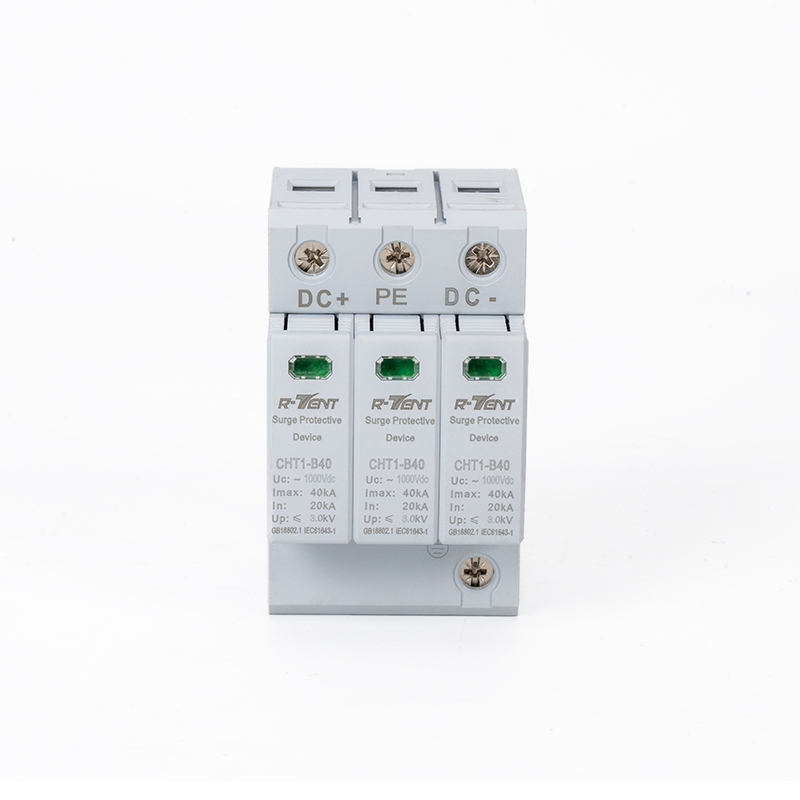
Our NEW CHT1 - B40KA 3p Surger Protective Device(SPD) and NEW CHT1 - B40KA 2p Surger Protective Device(SPD) are also designed with frequency response in mind. These devices are capable of handling high - energy surges and provide reliable protection for a variety of DC electrical systems. They are suitable for use in industrial, commercial, and residential applications, where they can safeguard sensitive electronic equipment from voltage spikes.
How to Evaluate Frequency Response
When choosing a DC surge protector, it's important to evaluate its frequency response. Here are some ways to do this:
Manufacturer's Specifications
Reputable manufacturers will provide detailed specifications about the frequency response of their surge protectors. Look for information such as the frequency range over which the protector is effective and the insertion loss (the amount of signal attenuation) at different frequencies.
Testing and Certification
Surge protectors that have been tested and certified by independent organizations are more likely to have reliable frequency response performance. Look for certifications such as UL (Underwriters Laboratories) or IEC (International Electrotechnical Commission) standards, which ensure that the protector meets certain quality and performance criteria.
Application - Specific Requirements
Consider the specific requirements of your application. If you are protecting a high - frequency electronic system, you may need a surge protector with a wider frequency response. On the other hand, if your application is less sensitive to high - frequency surges, a protector with a more limited frequency range may be sufficient.
Contact Us for Purchase and Consultation
If you are in the market for a high - quality DC surge protector with excellent frequency response, we are here to help. Our team of experts can provide you with detailed information about our products, assist you in choosing the right surge protector for your application, and answer any questions you may have. Whether you are a small business owner looking to protect your office equipment or a large - scale industrial operator in need of surge protection for your critical systems, we have the solutions to meet your needs.
References
- IEEE Standard for Surge Protective Devices (SPDs) for Low - Voltage AC Power Circuits.
- UL 1449 Standard for Surge Protective Devices.
- IEC 61643 - 11 Low - voltage surge protective devices - Part 11: Surge protective devices connected to low - voltage power systems - Requirements and tests.