


As a supplier of 10Q Current Transformers, I've witnessed firsthand the pivotal role that core materials play in determining the performance of these essential electrical devices. In this blog post, I'll delve into the intricate relationship between core materials and the performance of 10Q Current Transformers, exploring how different materials can impact various aspects of their operation.
Understanding the Basics of 10Q Current Transformers
Before we dive into the influence of core materials, let's briefly review what a 10Q Current Transformer is and how it functions. A current transformer (CT) is a type of instrument transformer that is used to measure alternating current (AC). It works by stepping down the high current in a primary circuit to a lower, more manageable current in a secondary circuit, which can then be measured by a meter or other device.
The 10Q designation refers to a specific class of current transformers that are designed to meet certain accuracy requirements. These transformers are commonly used in electrical power systems for metering, protection, and control applications.
The Role of the Core in a Current Transformer
The core is the heart of a current transformer, and its properties have a significant impact on the transformer's performance. The core is typically made of a magnetic material that can be easily magnetized and demagnetized. When an alternating current flows through the primary winding of the transformer, it creates a magnetic field in the core. This magnetic field then induces a current in the secondary winding, which is proportional to the current in the primary winding.
The core material affects several key performance parameters of a current transformer, including:
- Accuracy: The accuracy of a current transformer is determined by how closely the secondary current follows the primary current. The core material can affect the accuracy of the transformer by introducing hysteresis and eddy current losses, which can cause the secondary current to deviate from the ideal value.
- Linearity: Linearity refers to the ability of a current transformer to produce a secondary current that is proportional to the primary current over a wide range of currents. The core material can affect the linearity of the transformer by introducing saturation, which occurs when the magnetic field in the core reaches its maximum value and can no longer increase.
- Burden: The burden is the load that is connected to the secondary winding of the current transformer. The core material can affect the burden of the transformer by introducing losses, which can cause the secondary voltage to drop and reduce the accuracy of the measurement.
- Transient response: The transient response of a current transformer refers to its ability to respond quickly to changes in the primary current. The core material can affect the transient response of the transformer by introducing magnetic hysteresis and eddy current losses, which can cause the transformer to respond slowly to changes in the primary current.
Common Core Materials Used in 10Q Current Transformers
There are several different types of core materials that are commonly used in 10Q Current Transformers, each with its own unique properties and advantages. Some of the most common core materials include:
- Silicon steel: Silicon steel is a type of electrical steel that is widely used in the construction of current transformers. It has a high magnetic permeability, which means that it can be easily magnetized and demagnetized. Silicon steel also has low hysteresis and eddy current losses, which makes it an ideal material for high-accuracy current transformers.
- Amorphous metal: Amorphous metal is a type of metal that has a non-crystalline structure. It has a very high magnetic permeability and low hysteresis and eddy current losses, which makes it an excellent material for high-performance current transformers. Amorphous metal is also more expensive than silicon steel, which limits its use in some applications.
- Nanocrystalline metal: Nanocrystalline metal is a type of metal that has a very fine grain structure. It has a high magnetic permeability and low hysteresis and eddy current losses, which makes it an ideal material for high-accuracy current transformers. Nanocrystalline metal is also more expensive than silicon steel, but it offers better performance in terms of accuracy and linearity.
Comparing the Performance of Different Core Materials
To illustrate the impact of core materials on the performance of 10Q Current Transformers, let's compare the performance of three different types of current transformers: the LA-10Q Current Transformer, the LAJ-10Q Current Transformer, and the LZZBJ9-10 B Current Transformer.
The LA-10Q Current Transformer uses a silicon steel core, which is a common and cost-effective material for current transformers. The LAJ-10Q Current Transformer uses an amorphous metal core, which offers better performance in terms of accuracy and linearity. The LZZBJ9-10 B Current Transformer uses a nanocrystalline metal core, which offers the highest level of performance in terms of accuracy, linearity, and transient response.

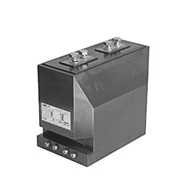
In terms of accuracy, the LZZBJ9-10 B Current Transformer with a nanocrystalline metal core offers the highest level of accuracy, followed by the LAJ-10Q Current Transformer with an amorphous metal core, and then the LA-10Q Current Transformer with a silicon steel core. In terms of linearity, the LZZBJ9-10 B Current Transformer also offers the best performance, followed by the LAJ-10Q Current Transformer and then the LA-10Q Current Transformer.
In terms of transient response, the LZZBJ9-10 B Current Transformer with a nanocrystalline metal core offers the fastest response time, followed by the LAJ-10Q Current Transformer with an amorphous metal core, and then the LA-10Q Current Transformer with a silicon steel core.
Choosing the Right Core Material for Your Application
When choosing a core material for a 10Q Current Transformer, it's important to consider the specific requirements of your application. If accuracy is the most important factor, then a nanocrystalline metal core may be the best choice. If cost is a major consideration, then a silicon steel core may be a more suitable option.
It's also important to consider the operating conditions of the transformer, such as the temperature, humidity, and frequency of the electrical system. Some core materials may be more suitable for certain operating conditions than others.
Conclusion
In conclusion, the core material has a significant impact on the performance of a 10Q Current Transformer. Different core materials offer different levels of accuracy, linearity, burden, and transient response, and it's important to choose the right core material for your specific application.
As a supplier of 10Q Current Transformers, we offer a wide range of products with different core materials to meet the needs of our customers. Whether you need a high-accuracy transformer for metering applications or a cost-effective transformer for protection and control applications, we have the right solution for you.
If you're interested in learning more about our 10Q Current Transformers or would like to discuss your specific requirements, please don't hesitate to contact us. We're here to help you find the best solution for your electrical power system.
References
- Grover, F. W. (1946). Inductance Calculations: Working Formulas and Tables. Dover Publications.
- McLyman, C. W. (2004). Transformer and Inductor Design Handbook (3rd ed.). CRC Press.
- Roth, C. L. (1994). Industrial Electronics Handbook. CRC Press.