


In the realm of electrical systems, safeguarding sensitive DC equipment from short - circuit surges is of utmost importance. As a DC surge protector supplier, I have witnessed firsthand the critical role these devices play in maintaining the stability and longevity of various DC - powered applications. In this blog, I will delve into the mechanisms by which a DC surge protector handles short - circuit surges.

Understanding Short - Circuit Surges
Before exploring how a DC surge protector deals with short - circuit surges, it is essential to understand what these surges are. A short - circuit surge occurs when there is an unintended low - resistance connection between two points in an electrical circuit. This can be caused by a variety of factors, such as damaged insulation, faulty wiring, or component failures. The sudden drop in resistance results in a large current flow, which can generate a significant surge of electrical energy.
Short - circuit surges can have detrimental effects on DC equipment. They can cause overheating, damage to electronic components, and even complete system failure. In addition, these surges can pose a safety hazard, increasing the risk of electrical fires and shocks.
Key Components of a DC Surge Protector
A DC surge protector typically consists of several key components that work together to handle short - circuit surges effectively.
Metal Oxide Varistors (MOVs)
MOVs are one of the most common components in DC surge protectors. They are made of a ceramic material with a high nonlinear resistance. Under normal operating conditions, MOVs have a very high resistance, allowing only a small leakage current to flow. However, when a short - circuit surge occurs and the voltage exceeds a certain threshold (the clamping voltage), the resistance of the MOV decreases rapidly. This allows the MOV to divert the excess current away from the protected equipment and into the ground.
The clamping voltage of an MOV is a crucial parameter. It determines the maximum voltage that the protected equipment will be exposed to during a surge. A lower clamping voltage provides better protection but may also make the MOV more susceptible to degradation over time.
Gas Discharge Tubes (GDTs)
GDTs are another important component in some DC surge protectors. They are filled with an inert gas and have two or more electrodes. Under normal conditions, the gas in the GDT is in an insulating state, and no current can flow between the electrodes. When a short - circuit surge occurs and the voltage across the GDT reaches a certain breakdown voltage, the gas ionizes, creating a conductive path. This allows the GDT to conduct the surge current and divert it to the ground.
GDTs have a relatively high breakdown voltage and can handle large surge currents. They are often used in combination with MOVs to provide multi - stage protection. The GDT can handle the initial high - energy part of the surge, while the MOV can fine - tune the voltage and provide additional protection.
Fuses and Circuit Breakers
Fuses and circuit breakers are protective devices that are used to prevent excessive current flow in the event of a short - circuit. Fuses are made of a thin wire that melts when the current exceeds a certain rating, interrupting the circuit. Circuit breakers, on the other hand, are reusable devices that can automatically trip when the current reaches a preset level.
In a DC surge protector, fuses and circuit breakers are typically placed in series with the protected circuit. They act as a last - resort protection mechanism, disconnecting the protected equipment from the power source if the surge protector fails to handle the short - circuit surge properly.
How a DC Surge Protector Handles Short - Circuit Surges
When a short - circuit surge occurs, the DC surge protector goes through a series of steps to protect the connected equipment.
Detection
The first step is the detection of the short - circuit surge. The surge protector continuously monitors the voltage and current in the circuit. When the voltage or current exceeds normal operating levels, the surge protector recognizes that a surge has occurred.
Response
Once the surge is detected, the components of the surge protector start to respond. If the surge voltage is relatively low, the MOVs may be the first to react. They will start to conduct current and divert the excess energy away from the protected equipment. If the surge is more severe, the GDTs may also come into play. They will break down and provide a low - resistance path for the surge current to flow to the ground.
Limiting the Voltage
During the response phase, the surge protector also works to limit the voltage across the protected equipment. The MOVs and GDTs act as voltage - clamping devices, ensuring that the voltage does not exceed a safe level. By diverting the excess current and clamping the voltage, the surge protector protects the sensitive components of the DC equipment from damage.
Isolation
In some cases, if the surge is extremely large or if the surge protector components are damaged, the fuses or circuit breakers in the surge protector will operate. They will isolate the protected equipment from the power source, preventing further damage. This isolation is a crucial safety feature that helps to protect both the equipment and the users.
Our Products and Their Capabilities
As a DC surge protector supplier, we offer a range of high - quality products that are designed to handle short - circuit surges effectively.
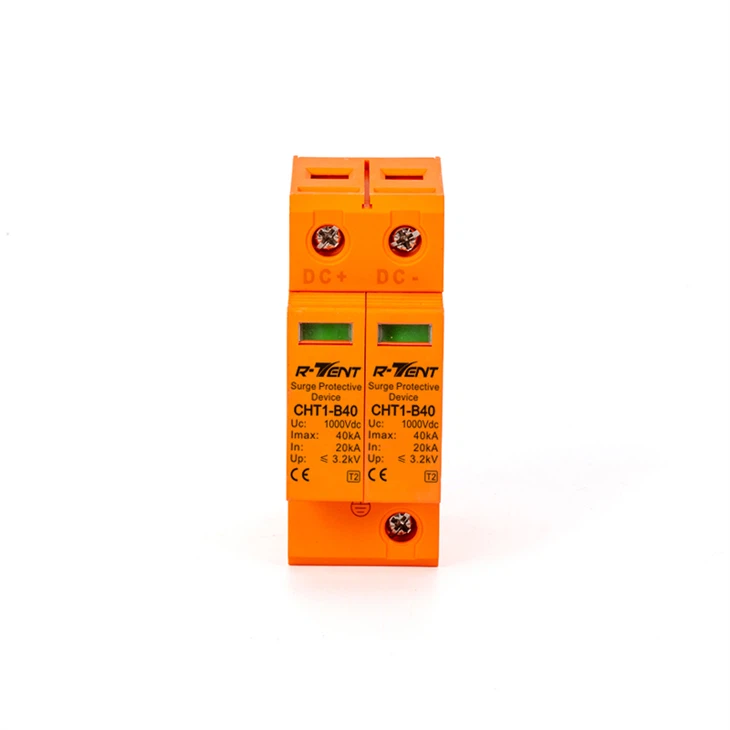
Our NEW CHT1 - B40KA 2p Surger Protective Device(SPD) is a reliable choice for protecting DC circuits. It is equipped with advanced MOVs and GDTs, which can quickly detect and divert short - circuit surges. The 2p design provides comprehensive protection for both the positive and negative terminals of the DC circuit.
The NEW CHT1 - B40KA 3p Surger Protective Device(SPD) is another excellent option. With its 3p configuration, it offers enhanced protection for more complex DC systems. It can handle larger surge currents and provides better isolation in the event of a short - circuit.
For high - voltage DC applications, our New 1500V DC Surge Protective Device is specifically designed. It can withstand high - energy short - circuit surges and provides reliable protection for DC equipment operating at 1500V.
Contact Us for Procurement and Consultation
If you are looking for a reliable DC surge protector to safeguard your equipment from short - circuit surges, we are here to help. Our products are designed with the latest technology and high - quality materials to ensure optimal performance and long - term reliability.
Whether you have questions about our products, need technical support, or are interested in placing an order, please feel free to contact us. We have a team of experienced professionals who can provide you with detailed information and guidance on choosing the right DC surge protector for your specific needs.
References
- Brown, R. E. (2012). Surge Protection for Low - Voltage DC Systems. IEEE Transactions on Industry Applications, 48(6), 2027 - 2035.
- Blackburn, T. D. (2015). Protective Relaying: Principles and Applications. CRC Press.
- Perry, B. (2018). Power System Surges: Causes, Effects, and Mitigation. Wiley.