


What is the signal strength of a passive lightning counter?
In the realm of lightning detection and safety, passive lightning counters play a crucial role. As a supplier of passive lightning counters, understanding the signal strength of these devices is fundamental to their proper application and performance.
Understanding Passive Lightning Counters
A passive lightning counter is a device designed to detect and record the occurrence of lightning strikes without the need for an external power source. It operates by sensing the electromagnetic pulses generated by lightning discharges. These counters are often used in various settings, including industrial facilities, telecommunications towers, and power grids, to monitor lightning activity and assess the risk of lightning - related damage.
The Concept of Signal Strength
Signal strength in the context of a passive lightning counter refers to the magnitude of the electromagnetic signal that the counter can detect and process. This signal is directly related to the energy of the lightning strike. A more powerful lightning strike will generate a stronger electromagnetic pulse, which in turn results in a higher - strength signal being received by the counter.
The signal strength is typically measured in units such as volts or decibels (dB). In the case of a passive lightning counter, the signal strength determines the counter's ability to accurately detect and record lightning strikes. If the signal strength is too low, the counter may fail to detect a strike, leading to inaccurate data collection. On the other hand, if the counter is not designed to handle high - strength signals, it may be damaged by a particularly powerful lightning strike.
Factors Affecting Signal Strength
Several factors can influence the signal strength received by a passive lightning counter.
Distance from the Lightning Strike
The distance between the counter and the lightning strike is one of the most significant factors. As the distance increases, the strength of the electromagnetic signal decreases according to the inverse - square law. This means that a lightning strike that occurs closer to the counter will generate a stronger signal than one that is farther away. For example, a strike that occurs 1 kilometer away will produce a much stronger signal at the counter compared to a strike that occurs 10 kilometers away.
Atmospheric Conditions
Atmospheric conditions can also have an impact on signal strength. For instance, thunderstorms are often accompanied by various weather phenomena such as rain, fog, and high winds. These conditions can cause attenuation of the electromagnetic signal as it travels through the atmosphere. Raindrops, for example, can scatter and absorb the electromagnetic waves, reducing the signal strength received by the counter.
Obstacles and Interference
The presence of obstacles between the lightning strike and the counter can block or reflect the electromagnetic signal, reducing its strength. Buildings, trees, and other large structures can act as barriers, preventing the signal from reaching the counter directly. Additionally, electromagnetic interference from other sources, such as power lines, radio transmitters, and electronic devices, can also affect the signal strength and introduce noise into the detection system.
Measuring Signal Strength in Passive Lightning Counters
To accurately measure the signal strength of a passive lightning counter, specialized equipment is often used. This equipment can include oscilloscopes, spectrum analyzers, and signal strength meters. These tools allow technicians to analyze the characteristics of the electromagnetic signal received by the counter, such as its amplitude, frequency, and duration.
By measuring the signal strength, we can determine the sensitivity of the counter. A highly sensitive counter can detect weaker signals, which means it can detect lightning strikes that are farther away or less powerful. However, increasing the sensitivity also increases the risk of false detections due to electromagnetic interference. Therefore, finding the right balance between sensitivity and false detection rate is crucial in the design and calibration of passive lightning counters.
Importance of Signal Strength in Passive Lightning Counters
The signal strength of a passive lightning counter is of utmost importance for several reasons.
Accurate Lightning Detection
Accurate detection of lightning strikes is essential for assessing the risk of lightning - related damage. A counter with the appropriate signal strength range can detect a wide variety of lightning strikes, from weak cloud - to - cloud discharges to powerful cloud - to - ground strikes. This allows for a more comprehensive understanding of the lightning activity in a particular area.
Data Collection and Analysis
The signal strength data collected by the counter can be used for further analysis. For example, by analyzing the signal strength and frequency of lightning strikes over time, we can identify patterns and trends in lightning activity. This information can be used for weather forecasting, risk assessment, and the development of lightning protection strategies.
System Reliability
A passive lightning counter with a well - calibrated signal strength range is more reliable. It can operate effectively in different environmental conditions and is less likely to experience false detections or failures. This reliability is crucial for applications where continuous and accurate lightning monitoring is required, such as in critical infrastructure and industrial facilities.
Our Passive Lightning Counter Module
As a supplier of passive lightning counters, we offer a high - quality Passive Lightning Counter Module. Our module is designed to have an optimal signal strength range, allowing it to detect a wide range of lightning strikes with high accuracy.
The module is equipped with advanced sensors that can efficiently capture the electromagnetic signals generated by lightning. It has been carefully calibrated to minimize false detections while maximizing the detection of real lightning strikes. Our engineering team has conducted extensive tests in various environmental conditions to ensure the reliability and performance of the module.
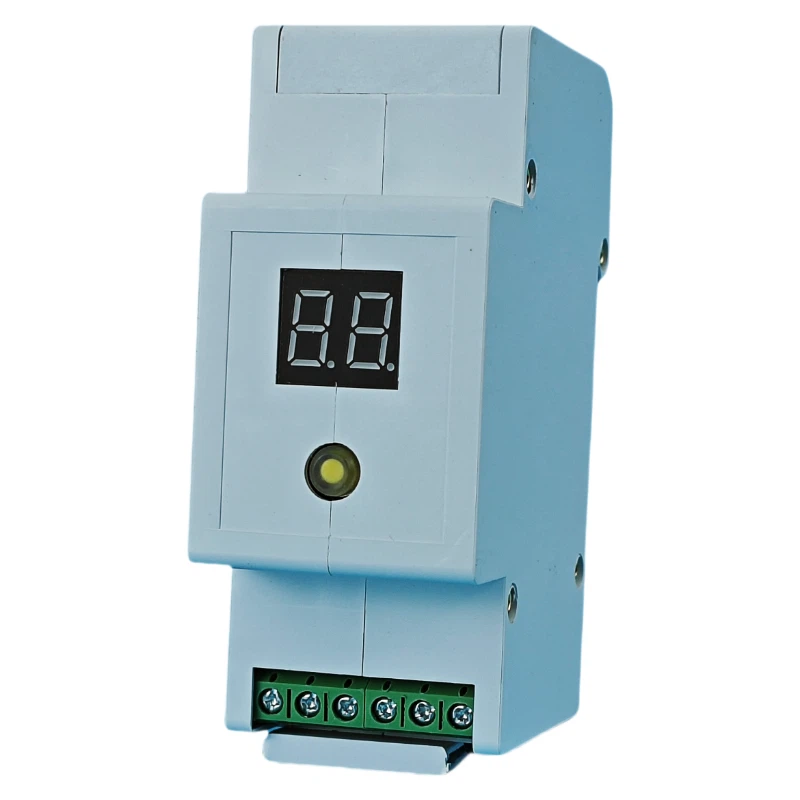
The signal strength of our passive lightning counter module is adjustable within a certain range, which allows for customization according to the specific needs of different applications. Whether you are monitoring lightning activity in a large industrial complex or a small rural area, our module can be configured to provide accurate and reliable data.
Conclusion
In conclusion, the signal strength of a passive lightning counter is a critical parameter that affects its performance, accuracy, and reliability. Understanding the factors that influence signal strength and how to measure and optimize it is essential for the proper use of these devices.
As a supplier, we are committed to providing high - quality passive lightning counter modules that offer excellent signal strength characteristics. Our products are designed to meet the diverse needs of our customers and provide accurate lightning detection data.
If you are interested in purchasing our passive lightning counter modules or have any questions about their signal strength and performance, please feel free to contact us for further discussion and procurement negotiation. We look forward to working with you to enhance your lightning monitoring capabilities.
References
- Uman, M. A. (1987). Lightning. Dover Publications.
- Rakov, V. A., & Uman, M. A. (2003). Lightning: Physics and Effects. Cambridge University Press.
- Cummins, K. L., & Murphy, M. J. (2009). Overview of lightning locating systems: History, techniques, and data uses. Journal of Atmospheric and Oceanic Technology, 26(3), 599 - 618.