


What is the insulation resistance of a 40KA surge protection device?
As a supplier of 40KA surge protection devices, I often encounter inquiries about various technical specifications, and one question that frequently arises is about the insulation resistance of these devices. In this blog post, I'll delve into what insulation resistance means for a 40KA surge protection device, why it's important, and how it impacts the overall performance and safety of electrical systems.
Understanding Insulation Resistance
Insulation resistance is a measure of the opposition to the flow of direct current (DC) through the insulation material of an electrical component. In the context of a 40KA surge protection device, it refers to the resistance between the conductive parts of the device and its outer casing or between different conductive parts within the device that are supposed to be electrically isolated.
The insulation material in a surge protection device serves a crucial role. It prevents unwanted electrical leakage, which could lead to short - circuits, electrical shock hazards, or interference with other electrical equipment. A high insulation resistance indicates that the insulation is in good condition and effectively blocks the flow of current where it's not supposed to go.
Importance of Insulation Resistance in 40KA Surge Protection Devices
- Safety: Safety is of utmost importance in any electrical system. A surge protection device with low insulation resistance can pose a significant risk. Electrical leakage can cause parts of the device or the surrounding equipment to become energized, increasing the likelihood of electrical shock to personnel. For example, in industrial settings where workers are in close proximity to electrical panels, a faulty surge protection device with poor insulation could be a life - threatening hazard.
- Reliability: A high insulation resistance ensures the reliable operation of the surge protection device. When the insulation is intact, the device can effectively divert surge currents to the ground without any internal leakage that might compromise its performance. This is especially crucial in protecting sensitive electronic equipment from power surges. For instance, in data centers, where a single power surge can cause significant data loss and downtime, a reliable surge protection device with proper insulation is essential.
- Compliance: Electrical safety standards often specify minimum insulation resistance values for electrical equipment, including surge protection devices. Meeting these standards is not only a legal requirement but also a mark of quality. Customers can have more confidence in a product that meets or exceeds industry - recognized safety standards.
Measuring Insulation Resistance
Insulation resistance is typically measured using an insulation resistance tester, also known as a megohmmeter or “megger”. The tester applies a DC voltage to the device under test and measures the resulting current. Using Ohm's law (R = V/I), the insulation resistance can be calculated.
For a 40KA surge protection device, the measurement should be taken between the live conductors and the ground or between different phases, depending on the device's configuration. The test voltage and the required minimum insulation resistance value may vary depending on the application and the relevant standards. For example, in some low - voltage applications, a minimum insulation resistance of 1 megohm might be acceptable, while in high - voltage or more critical applications, the requirement could be much higher.
Factors Affecting Insulation Resistance
- Age and Wear: Over time, the insulation material in a surge protection device can deteriorate due to factors such as heat, humidity, and electrical stress. As the insulation ages, its resistance may decrease. For example, in a hot and humid environment, the insulation may absorb moisture, which can significantly reduce its resistance.
- Contamination: Dust, dirt, and chemical contaminants can also affect insulation resistance. These contaminants can create conductive paths on the surface of the insulation, allowing current to leak. In industrial environments with high levels of dust or chemical fumes, regular cleaning and maintenance of surge protection devices are necessary to maintain proper insulation resistance.
- Mechanical Damage: Physical damage to the insulation, such as cracks or cuts, can directly lead to a decrease in insulation resistance. This can occur during installation, maintenance, or due to external impacts. For example, if a surge protection device is mishandled during installation and the insulation is damaged, it can compromise its performance.
Our Product Range and Insulation Resistance
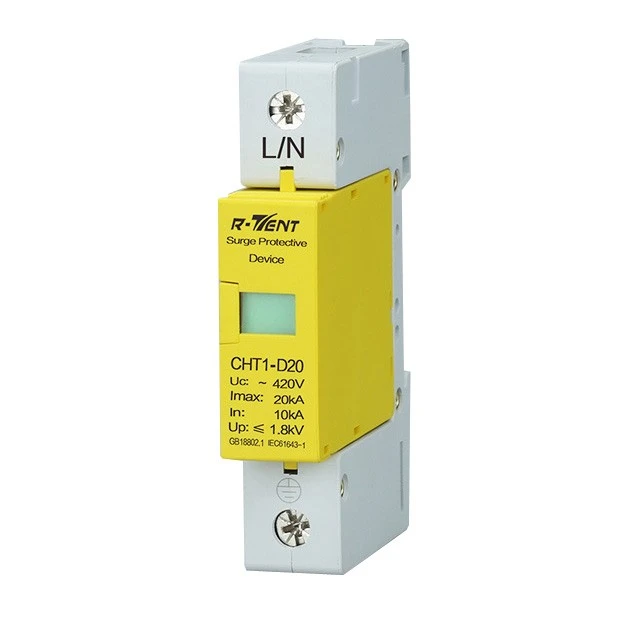
At our company, we offer a range of high - quality 40KA surge protection devices. We ensure that each device undergoes rigorous testing to meet and exceed the required insulation resistance standards. In addition to our 40KA devices, we also have other products in our portfolio, such as the CHT1 - B120 KA Surge Protection Device, CHT1 - D20KA Surge Protection Device, and CHT1 - D10 KA Surge Protection Device. These devices are designed with high - quality insulation materials to ensure long - term reliability and safety.

Testing and Maintenance
Regular testing of the insulation resistance of surge protection devices is essential. It is recommended to perform insulation resistance tests during installation, after any maintenance work, and at regular intervals during the device's service life. Maintenance also includes checking for signs of physical damage, cleaning the device, and ensuring proper installation.
Conclusion
Insulation resistance is a critical parameter for 40KA surge protection devices. It plays a vital role in ensuring safety, reliability, and compliance with electrical standards. As a supplier, we are committed to providing high - quality surge protection devices with excellent insulation properties. Whether you are in the industrial, commercial, or residential sector, our products can offer reliable protection against power surges.
If you are interested in purchasing 40KA surge protection devices or any of our other products, we encourage you to contact us for more information and to start a procurement discussion. Our team of experts is ready to assist you in finding the right solution for your specific electrical protection needs.
References
- “Electrical Safety Standards for Surge Protection Devices,” International Electrotechnical Commission (IEC).
- “Handbook of Electrical Insulation Materials,” McGraw - Hill.
- “Surge Protection: Principles and Applications,” IEEE Press.