


As a supplier of passive lightning counters, I often receive inquiries from customers regarding the installation angle requirements for these devices. Understanding the correct installation angle is crucial for ensuring the accuracy and reliability of passive lightning counters. In this blog post, I will delve into the significance of the installation angle, the factors that influence it, and the optimal angles for different installation scenarios.
The Importance of Installation Angle
The installation angle of a passive lightning counter plays a vital role in its performance. A passive lightning counter is designed to detect the magnetic field changes caused by lightning strikes. These magnetic fields propagate in a specific pattern, and the orientation of the counter relative to these fields can significantly impact its ability to detect and record lightning events accurately.
If the installation angle is incorrect, the counter may experience a reduced sensitivity, leading to missed detections or inaccurate recordings. For example, if the counter is installed at an angle that is not aligned with the predominant direction of the magnetic fields, it may not be able to capture the full strength of the signals, resulting in a lower detection rate.
Factors Influencing the Installation Angle
Several factors influence the optimal installation angle for a passive lightning counter. These include the geographical location, the local lightning characteristics, and the specific design of the counter.
Geographical Location
The Earth's magnetic field varies depending on the geographical location. In regions closer to the magnetic poles, the magnetic field lines are more vertical, while in regions near the equator, they are more horizontal. This variation in the magnetic field orientation affects the optimal installation angle of the passive lightning counter.
For example, in high - latitude regions, the counter may need to be installed at a more vertical angle to align with the magnetic field lines. Conversely, in low - latitude regions, a more horizontal installation may be required.
Local Lightning Characteristics
The local lightning characteristics, such as the predominant direction of lightning strikes and the frequency of different types of lightning (e.g., cloud - to - ground, cloud - to - cloud), also influence the installation angle. In areas where lightning strikes predominantly occur from a particular direction, the counter can be installed at an angle that maximizes its sensitivity to magnetic fields from that direction.
For instance, if most lightning strikes in a region come from the west, installing the counter with its sensitive axis oriented towards the west can improve its detection efficiency.
Counter Design
The design of the passive lightning counter itself is another important factor. Different models of passive lightning counters have different sensitivities and detection mechanisms, which may require specific installation angles. Some counters are designed to be more omnidirectional, while others are more directional.
Omnidirectional counters can be installed at a wider range of angles, as they are capable of detecting magnetic fields from multiple directions. Directional counters, on the other hand, need to be installed at a specific angle to align with the direction of the expected magnetic fields.
Optimal Installation Angles
Based on the factors mentioned above, here are some general guidelines for the optimal installation angles of passive lightning counters:
Horizontal Installation
In most cases, a horizontal installation is recommended for passive lightning counters. This is because the magnetic fields generated by cloud - to - ground lightning strikes typically have a significant horizontal component. By installing the counter horizontally, it can effectively detect these horizontal magnetic field changes.
A horizontal installation also provides stability and reduces the risk of the counter being affected by environmental factors such as wind and rain. However, it is important to ensure that the counter is level to avoid any misalignment that could affect its performance.
Vertical Installation
In some situations, a vertical installation may be more appropriate. For example, in regions where the Earth's magnetic field is highly vertical, or when the counter is designed to be more sensitive to vertical magnetic fields, a vertical installation can improve its detection capabilities.
Vertical installation can also be useful when the counter needs to be installed in a confined space or when there are specific mounting requirements. However, vertical installations may be more susceptible to interference from other vertical magnetic sources, such as nearby electrical equipment.
Adjusting the Angle for Specific Conditions
In addition to the general horizontal or vertical installation, the angle of the counter may need to be adjusted based on the local lightning characteristics. For example, if the predominant direction of lightning strikes is known, the counter can be rotated slightly to align with that direction.
This adjustment can be made by using the mounting brackets or adjustable features of the counter. It is important to note that any angle adjustments should be made carefully to ensure that the counter remains stable and properly aligned.
Installation Tips
When installing a passive lightning counter, the following tips can help ensure that the installation angle is correct:
- Refer to the Manufacturer's Instructions: The manufacturer's instructions provide detailed information on the recommended installation angle for the specific model of the passive lightning counter. It is important to follow these instructions carefully to ensure optimal performance.
- Use Alignment Tools: Tools such as spirit levels and compasses can be used to ensure that the counter is installed at the correct angle. A spirit level can help ensure that the counter is horizontal, while a compass can be used to align the counter with the magnetic north or the expected direction of lightning strikes.
- Test the Counter: After installation, it is important to test the counter to ensure that it is functioning properly. This can be done by triggering a simulated lightning event or by waiting for an actual lightning strike and checking the counter's recordings.
Conclusion
In conclusion, the installation angle of a passive lightning counter is a critical factor that affects its performance. By considering the geographical location, local lightning characteristics, and the design of the counter, the optimal installation angle can be determined. Whether it is a horizontal or vertical installation, or an adjusted angle based on specific conditions, ensuring the correct installation angle is essential for accurate and reliable lightning detection.
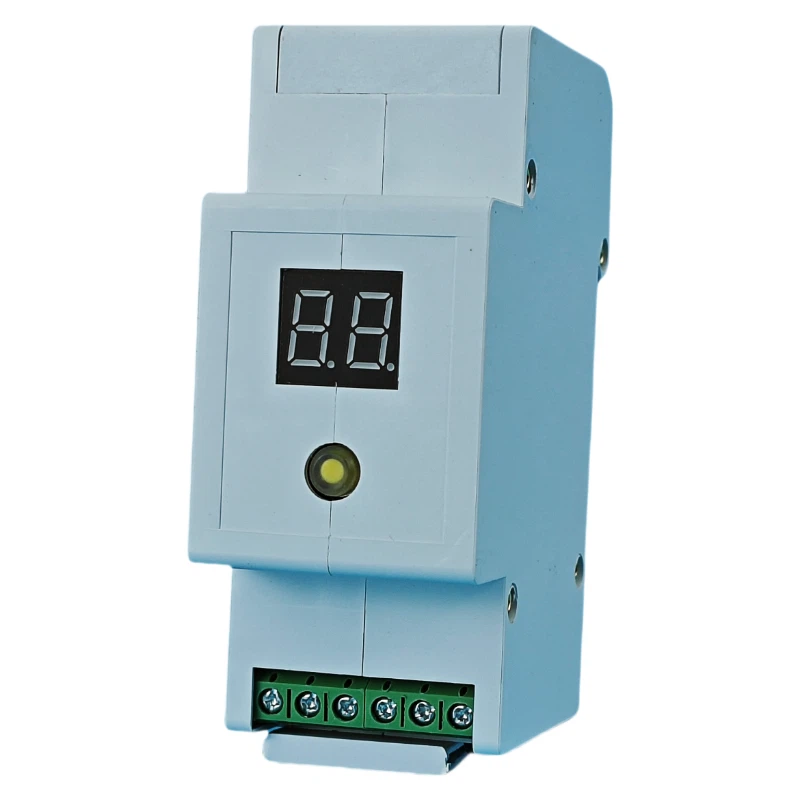
If you are in the market for a high - quality Passive Lightning Counter Module, we are here to help. Our passive lightning counters are designed with the latest technology to provide accurate and reliable lightning detection. We offer a range of models to suit different installation requirements and lightning conditions.
If you have any questions about the installation angle or would like to discuss your specific needs for a passive lightning counter, please do not hesitate to contact us for a detailed consultation. We look forward to partnering with you to provide the best lightning protection solutions.
References
- IEEE Standard for Safety in AC Substation Grounding
- International Electrotechnical Commission (IEC) standards related to lightning protection and monitoring
- Technical manuals of various passive lightning counter manufacturers