


Lightning is a powerful and fascinating natural phenomenon that has intrigued humanity for centuries. It poses significant risks to various structures, electrical systems, and even human lives. To mitigate these risks, lightning counters have become essential tools in monitoring and assessing lightning activity. There are two main types of lightning counters: passive and active. In this blog post, I'll delve into the differences between these two types, and as a supplier of passive lightning counters, I'll also highlight the unique advantages of our Passive Lightning Counter Module.
Working Principles
Passive Lightning Counters
Passive lightning counters operate based on the principle of detecting the electromagnetic fields generated by lightning strikes. When a lightning bolt occurs, it creates a rapid change in the magnetic field around it. Passive lightning counters are equipped with sensors that can detect these transient magnetic field variations. Once a significant change is detected, the counter records it as a lightning strike.
These counters do not require an external power source to detect lightning strikes. They are self - contained devices that rely solely on the energy from the lightning - generated electromagnetic fields to function. This makes them highly reliable in remote areas where power supply is scarce or unreliable.
Active Lightning Counters
Active lightning counters, on the other hand, are more complex in their operation. They use a combination of sensors and an internal power source, usually a battery or a connection to the electrical grid. These counters actively monitor the environment for various lightning - related parameters such as electric fields, radio frequency emissions, and optical signals.
The active monitoring approach allows them to provide more detailed information about lightning strikes. For example, they can distinguish between cloud - to - ground and cloud - to - cloud lightning, and they can also measure the intensity and direction of the lightning strikes.
Detection Range and Accuracy
Passive Lightning Counters
The detection range of passive lightning counters is relatively limited compared to active ones. They are typically designed to detect lightning strikes within a few kilometers of the installation site. However, their accuracy in simply counting the number of lightning strikes is quite high. They are less likely to produce false positives because they are specifically tuned to detect the characteristic magnetic field changes associated with lightning.
Active Lightning Counters
Active lightning counters have a much wider detection range, often spanning tens of kilometers. This broader range makes them suitable for large - scale monitoring applications such as airports, military bases, and large industrial complexes. In terms of accuracy, they can provide more comprehensive data about each lightning strike. However, the complexity of their operation also means that they are more prone to false positives, especially in areas with high levels of electromagnetic interference.
Installation and Maintenance
Passive Lightning Counters
One of the key advantages of passive lightning counters is their ease of installation. They do not require any external wiring for power, which simplifies the installation process significantly. They can be easily mounted on poles, rooftops, or other structures using basic mounting hardware.
Maintenance of passive lightning counters is also minimal. Since they have no internal power source or complex electronics, there are fewer components that can fail. Periodic visual inspections to ensure the sensor is clean and undamaged are usually sufficient to keep the counter in good working condition.
Active Lightning Counters
The installation of active lightning counters is more involved. They need to be connected to a power source, which may require running electrical cables. Additionally, they often need to be calibrated regularly to ensure accurate measurements. The calibration process can be time - consuming and may require specialized equipment.
Maintenance of active lightning counters is also more demanding. The internal power source needs to be replaced or recharged periodically, and the sensors and electronics need to be checked for proper functioning. Any malfunction in the complex electronics can lead to inaccurate data or complete failure of the counter.
Cost
Passive Lightning Counters
Passive lightning counters are generally more cost - effective than active ones. Their simple design and lack of a power source mean that they are cheaper to manufacture. The lower installation and maintenance costs also contribute to their overall affordability. This makes them an attractive option for small - scale applications such as residential buildings, small farms, and local weather stations.
Active Lightning Counters
Active lightning counters are more expensive due to their complex design and advanced features. The cost of the internal power source, the sophisticated sensors, and the electronics required for data processing all add to the overall price. Additionally, the higher installation and maintenance costs make them a more significant investment.
Applications
Passive Lightning Counters
Passive lightning counters are well - suited for applications where simple lightning strike counting is sufficient. They are commonly used in residential areas to monitor the frequency of lightning strikes near homes. They are also used in small - scale industrial facilities, such as workshops and warehouses, to assess the lightning risk.
In the field of agriculture, passive lightning counters can be installed on farms to help farmers understand the lightning activity in their area, which can be useful for protecting crops and livestock.
Active Lightning Counters
Active lightning counters are preferred for applications that require detailed lightning information. In the aviation industry, they are used at airports to monitor lightning activity and ensure the safety of aircraft during takeoff and landing. Military installations use them to protect sensitive equipment and personnel from lightning strikes.
Large - scale renewable energy projects, such as wind farms and solar power plants, also rely on active lightning counters to monitor and manage lightning - related risks to their infrastructure.
Our Passive Lightning Counter Module
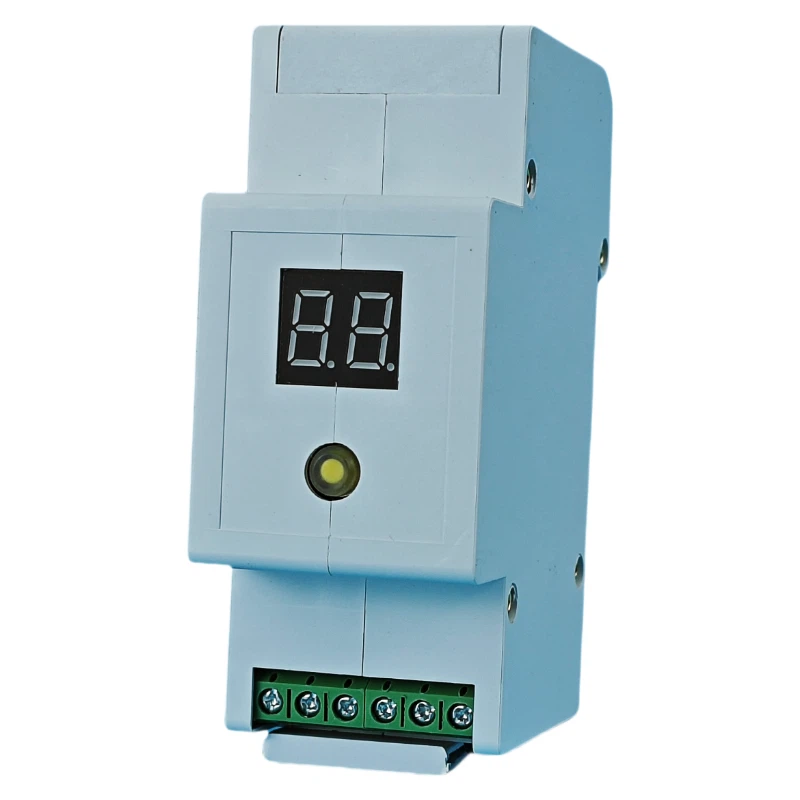
As a supplier of passive lightning counters, I am proud to introduce our Passive Lightning Counter Module. Our module is designed with the latest sensor technology to ensure high - accuracy lightning strike detection. It is compact and easy to install, making it suitable for a wide range of applications.
The module is built to withstand harsh environmental conditions, with a rugged housing that protects the internal components from dust, moisture, and extreme temperatures. It has a long service life, requiring minimal maintenance over its operational period.
We understand that different customers have different needs. That's why our passive lightning counter module can be customized to meet specific requirements. Whether you need a counter for a small residential building or a large industrial site, we can provide a solution that fits your needs.
Contact for Procurement
If you are interested in our passive lightning counter module or have any questions about lightning counters in general, we encourage you to reach out to us. We have a team of experts who can provide you with detailed information, technical support, and pricing options. We look forward to discussing your needs and helping you find the best lightning monitoring solution for your application.
References
- Uman, M. A. (2001). The Lightning Discharge. Cambridge University Press.
- Rakov, V. A., & Uman, M. A. (2003). Lightning: Physics and Effects. Cambridge University Press.
- Cooray, V. (2003). Electromagnetic Fields from Lightning and Related Problems. Springer.