


In the realm of meteorological monitoring and electrical safety, passive lightning counters play a crucial role. These devices are designed to record the occurrence of lightning strikes in a specific area, providing valuable data for various applications such as power grid management, aviation safety, and building protection. One of the key technical parameters of a passive lightning counter is its data sampling frequency, which significantly impacts the accuracy and reliability of the collected lightning strike data.
Understanding Data Sampling Frequency
Data sampling frequency refers to the number of times a system samples a continuous signal within a given time frame, usually measured in Hertz (Hz). In the context of a passive lightning counter, the sampling frequency determines how often the device checks for the presence of a lightning strike. A higher sampling frequency means that the counter can detect more short - duration lightning events and capture more detailed information about the lightning strikes.
For instance, if a passive lightning counter has a sampling frequency of 1 Hz, it checks for lightning strikes once per second. On the other hand, a counter with a sampling frequency of 10 Hz checks ten times per second. The choice of sampling frequency depends on the specific requirements of the application and the characteristics of the lightning events that need to be monitored.
Factors Affecting the Sampling Frequency of a Passive Lightning Counter
Lightning Characteristics
Lightning strikes can vary greatly in their duration, intensity, and frequency of occurrence. Some lightning events are very short - lived, lasting only a few microseconds, while others can persist for several milliseconds. To accurately detect and record these diverse lightning events, the sampling frequency of the passive lightning counter needs to be carefully selected.
For areas with a high frequency of short - duration lightning strikes, a higher sampling frequency is required. This ensures that the counter does not miss any important events. In contrast, in regions where lightning strikes are less frequent and have longer durations, a lower sampling frequency may be sufficient.
Signal Processing Capability
The internal signal processing system of the passive lightning counter also limits the achievable sampling frequency. A higher sampling frequency generates a larger amount of data that needs to be processed and stored. If the counter's signal processing unit does not have enough computing power or storage capacity, it may not be able to handle the high - frequency data effectively.
This can lead to data loss or inaccurate recording of lightning strikes. Therefore, when designing a passive lightning counter, manufacturers need to balance the sampling frequency with the capabilities of the signal processing system.
Power Consumption
Sampling at a high frequency consumes more power. Since passive lightning counters are often designed to operate in remote areas without a continuous power supply, power consumption is a critical factor. A high - frequency sampling counter may require a larger battery or a more efficient power management system to ensure long - term operation.
In some cases, a trade - off needs to be made between the sampling frequency and the power consumption to meet the practical requirements of the application.
Optimal Sampling Frequency for Different Applications
Power Grid Monitoring
In the power grid industry, accurate lightning strike data is essential for preventing power outages and protecting electrical equipment. Lightning strikes can cause voltage surges and damage to transformers, transmission lines, and other components of the power grid.
For power grid monitoring, a relatively high sampling frequency is recommended. A sampling frequency of 10 Hz or higher can help detect most lightning strikes accurately, allowing power grid operators to take timely measures to prevent damage. By analyzing the lightning strike data, operators can also identify vulnerable areas of the power grid and implement appropriate protection measures.
Building Protection
For building protection, the main goal is to ensure the safety of the building and its occupants. A passive lightning counter installed on a building can provide information about the frequency and intensity of lightning strikes in the vicinity.
A sampling frequency of 1 - 5 Hz may be sufficient for most building protection applications. This frequency can detect the majority of lightning strikes that pose a threat to the building. The collected data can be used to evaluate the effectiveness of the building's lightning protection system and make necessary improvements.
Aviation Safety
In the aviation industry, lightning strikes can pose a significant risk to aircraft. Passive lightning counters installed at airports or on aircraft can help monitor the lightning activity in the flight path.
Due to the high - speed movement of aircraft and the need for real - time information, a high sampling frequency is required. A sampling frequency of 20 Hz or more is often necessary to accurately detect and record lightning strikes during flight. This information can be used by air traffic controllers to guide aircraft safely around areas with active lightning.
Our Passive Lightning Counter Solutions
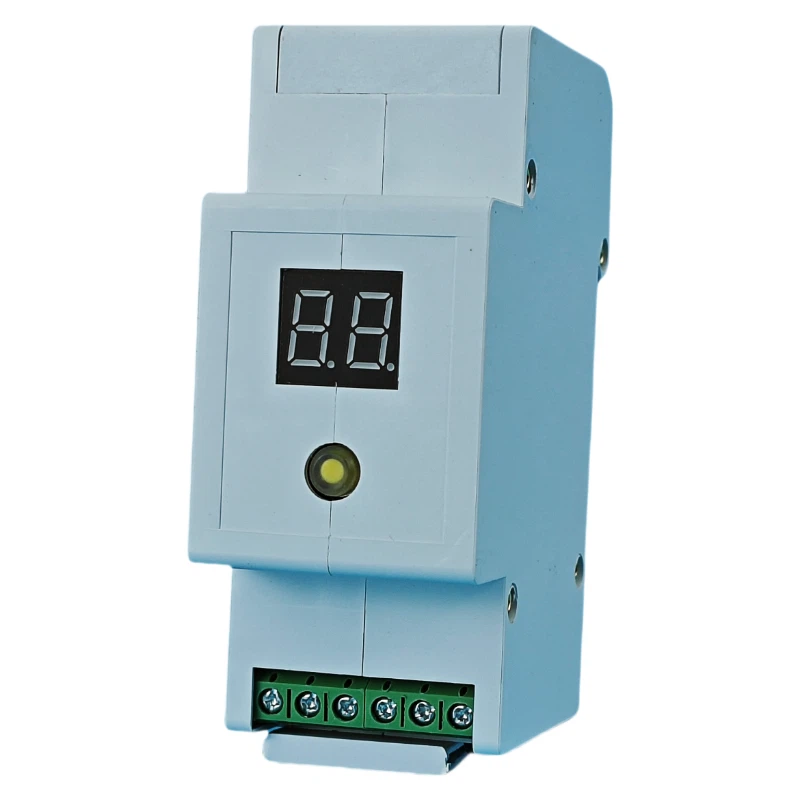
As a leading supplier of passive lightning counters, we understand the importance of selecting the right sampling frequency for different applications. Our Passive Lightning Counter Module is designed with advanced technology to offer a wide range of sampling frequencies to meet the diverse needs of our customers.
Our engineers have optimized the signal processing system to handle high - frequency data efficiently while keeping power consumption low. This allows our passive lightning counters to operate continuously in various environments, providing reliable lightning strike data.
We offer customizable solutions, where customers can choose the sampling frequency according to their specific requirements. Whether you need to monitor a large - scale power grid, protect a small building, or ensure aviation safety, our passive lightning counter can be tailored to your needs.
Contact Us for Purchase and Consultation
If you are interested in our passive lightning counter products or have any questions about data sampling frequency and its application, we invite you to contact us. Our team of experts is ready to provide you with detailed information and technical support. We can help you select the most suitable passive lightning counter with the optimal sampling frequency for your project.
References
- IEEE Std 1410 - 2010, IEEE Guide for Improving the Lightning Performance of Electric Power Overhead Distribution Lines.
- International Electrotechnical Commission (IEC) 62305 - 1:2010, Protection against lightning - Part 1: General principles.
- Uman, M. A. (2001). The Lightning Discharge. Cambridge University Press.