


As a supplier of passive lightning counters, understanding the data encryption method employed in these devices is of paramount importance. In this blog post, I'll delve into the intricacies of the data encryption method of a passive lightning counter, explaining its significance, the technologies involved, and how it benefits users.
The Significance of Data Encryption in Passive Lightning Counters
Passive lightning counters are designed to record and monitor lightning strikes in a given area. The data collected by these devices can be crucial for various applications, such as weather forecasting, aviation safety, and infrastructure protection. However, this data often contains sensitive information, including the location and frequency of lightning strikes, which must be protected from unauthorized access and manipulation.
Data encryption plays a vital role in ensuring the confidentiality, integrity, and authenticity of the data collected by passive lightning counters. By encrypting the data, we can prevent unauthorized parties from intercepting and reading the information, as well as protect it from being modified or tampered with during transmission and storage.
Common Data Encryption Methods Used in Passive Lightning Counters
Symmetric Encryption
Symmetric encryption is one of the most commonly used encryption methods in passive lightning counters. In symmetric encryption, the same key is used for both encryption and decryption of the data. This means that the sender and the receiver must share the same secret key in order to communicate securely.
One of the advantages of symmetric encryption is its simplicity and efficiency. It is relatively fast and requires less computational power compared to other encryption methods, making it suitable for use in resource-constrained devices such as passive lightning counters. However, the main drawback of symmetric encryption is the key management problem. Since the same key is used for both encryption and decryption, it must be securely distributed and stored to prevent it from being compromised.
Asymmetric Encryption
Asymmetric encryption, also known as public-key encryption, uses a pair of keys: a public key and a private key. The public key is freely available and can be used by anyone to encrypt the data, while the private key is kept secret and is used only by the owner to decrypt the data.
Asymmetric encryption provides a higher level of security compared to symmetric encryption, as it eliminates the need for the sender and the receiver to share a secret key. However, it is also more computationally intensive and slower than symmetric encryption, which can be a limitation in resource-constrained devices.
Hybrid Encryption
Hybrid encryption combines the advantages of both symmetric and asymmetric encryption. In hybrid encryption, a symmetric key is used to encrypt the data, and the symmetric key itself is encrypted using the recipient's public key. This way, the data is encrypted using the fast and efficient symmetric encryption algorithm, while the symmetric key is protected using the secure asymmetric encryption algorithm.
Hybrid encryption is often used in passive lightning counters to provide a high level of security while maintaining the efficiency of data encryption and decryption.
Our Passive Lightning Counter Module and Its Encryption Features
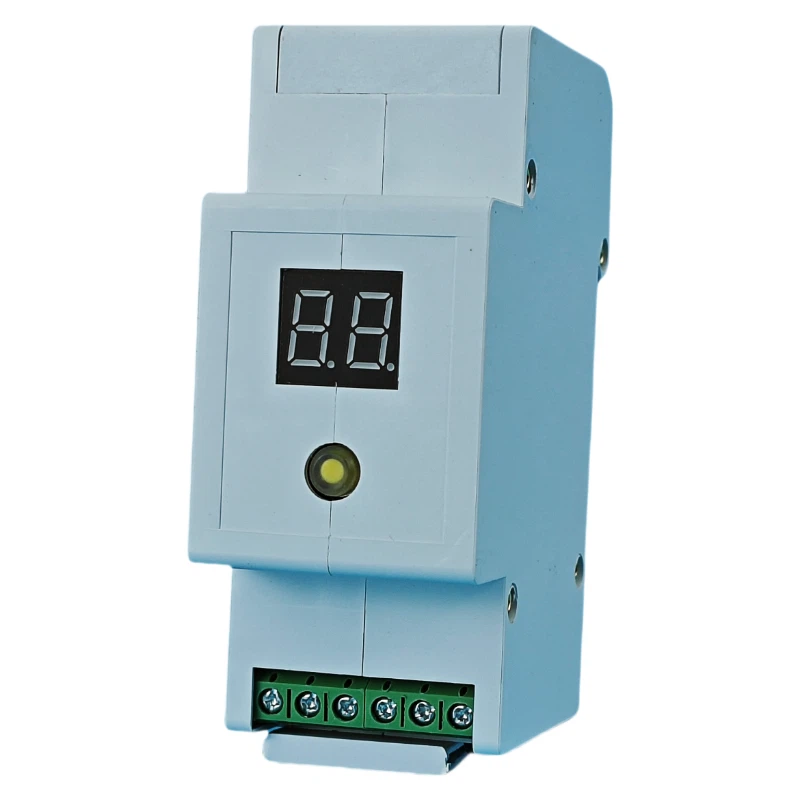
At our company, we offer a Passive Lightning Counter Module that is designed to provide accurate and reliable lightning strike data. Our module uses a hybrid encryption method to ensure the security of the data collected.
When a lightning strike is detected, the module encrypts the data using a symmetric encryption algorithm. The symmetric key used for encryption is then encrypted using the recipient's public key. The encrypted data and the encrypted symmetric key are then transmitted to the recipient, where the symmetric key is decrypted using the recipient's private key, and the data is decrypted using the decrypted symmetric key.
Our module also supports secure key management, ensuring that the symmetric key is securely generated, stored, and distributed. This helps to prevent the key from being compromised and ensures the confidentiality and integrity of the data.
Benefits of Using Our Encrypted Passive Lightning Counter Module
Enhanced Security
By using a hybrid encryption method, our passive lightning counter module provides a high level of security for the data collected. This helps to protect the sensitive information from unauthorized access and manipulation, ensuring the confidentiality and integrity of the data.
Reliability
Our module is designed to provide accurate and reliable lightning strike data. The encryption method used ensures that the data is not corrupted or modified during transmission and storage, providing users with trustworthy information.
Compliance
In many industries, there are strict regulations regarding the security and privacy of data. Our encrypted passive lightning counter module helps users to comply with these regulations by providing a secure and reliable way to collect and transmit lightning strike data.
Conclusion
Data encryption is an essential component of passive lightning counters, ensuring the security and integrity of the data collected. By using a hybrid encryption method, our Passive Lightning Counter Module provides a high level of security while maintaining the efficiency of data encryption and decryption.
If you are interested in learning more about our passive lightning counter module or would like to discuss your specific requirements, please feel free to contact us. We are always happy to help you find the best solution for your needs.
References
- Stallings, W. (2018). Cryptography and Network Security: Principles and Practice. Pearson.
- Schneier, B. (2007). Applied Cryptography: Protocols, Algorithms, and Source Code in C. Wiley.