


Hey there! I'm from a passive lightning counter supplier, and today I wanna chat about how our passive lightning counter adapts to different geographical locations.
First off, let's understand what a passive lightning counter is. It's a nifty device that can detect and record lightning strikes without the need for an external power source. Our Passive Lightning Counter Module is a prime example of this technology. It's designed to be reliable and easy to use, making it a great choice for various applications.
Now, different geographical locations have unique characteristics when it comes to lightning. Let's start with areas near the equator. These regions typically experience a high frequency of lightning due to the warm and humid climate. The intense solar heating causes rapid evaporation, leading to the formation of towering thunderclouds. Our passive lightning counter is well - equipped to handle this high - strike environment.
The sensors in our counter are highly sensitive. They can pick up even the faintest electromagnetic signals generated by lightning strikes. In equatorial regions, where lightning can be quite frequent, the counter has a large memory capacity. It can store a vast amount of data about the time, intensity, and direction of each strike. This data is crucial for researchers and local authorities to understand the lightning patterns and take appropriate safety measures.
Another important aspect is the durability of the device. In equatorial areas, there are often heavy rains and strong winds. Our passive lightning counter is built with a robust housing that can withstand these harsh weather conditions. It's made of high - quality materials that are resistant to corrosion, ensuring a long lifespan even in the most challenging environments.
Moving on to temperate regions. These areas have a more seasonal pattern of lightning. Lightning is more common during the summer months when there are warm, moist air masses colliding with cooler air. Our passive lightning counter can adapt to this variability.
During the off - season, when lightning strikes are rare, the counter enters a low - power mode. This helps to conserve its internal battery life. When the summer comes and the lightning activity picks up, the counter automatically switches to a high - sensitivity mode. It starts actively monitoring and recording every strike, providing accurate data about the lightning events in the area.
In temperate regions, there are also different types of terrain. For example, there might be mountains, forests, and plains. Our counter can be placed in various locations across these terrains. On mountains, where the air is thinner and the lightning can be more intense, the counter's sensors are calibrated to accurately measure the high - energy strikes. In forests, the device can be installed on trees or poles, and its design allows it to blend in with the natural environment while still functioning effectively.
Now, let's talk about polar regions. Lightning is relatively rare in these areas due to the cold temperatures and stable air masses. However, when it does occur, it can be quite unique. Our passive lightning counter is still useful in these regions.
The counter's low - power consumption is especially beneficial in polar areas where it might be difficult to replace batteries frequently. Even with the low frequency of lightning, the counter can detect and record any strikes that do happen. This data is valuable for understanding the changing climate patterns in these sensitive regions. The device is also designed to work in extremely cold temperatures. It has special insulation and heating elements to ensure that its internal components function properly even in sub - zero conditions.
Coastal areas also present their own set of challenges. The proximity to the ocean means that there are often saltwater mists and high humidity levels. Our passive lightning counter is designed to be resistant to saltwater corrosion. The housing is coated with a special material that protects the internal components from the corrosive effects of salt.
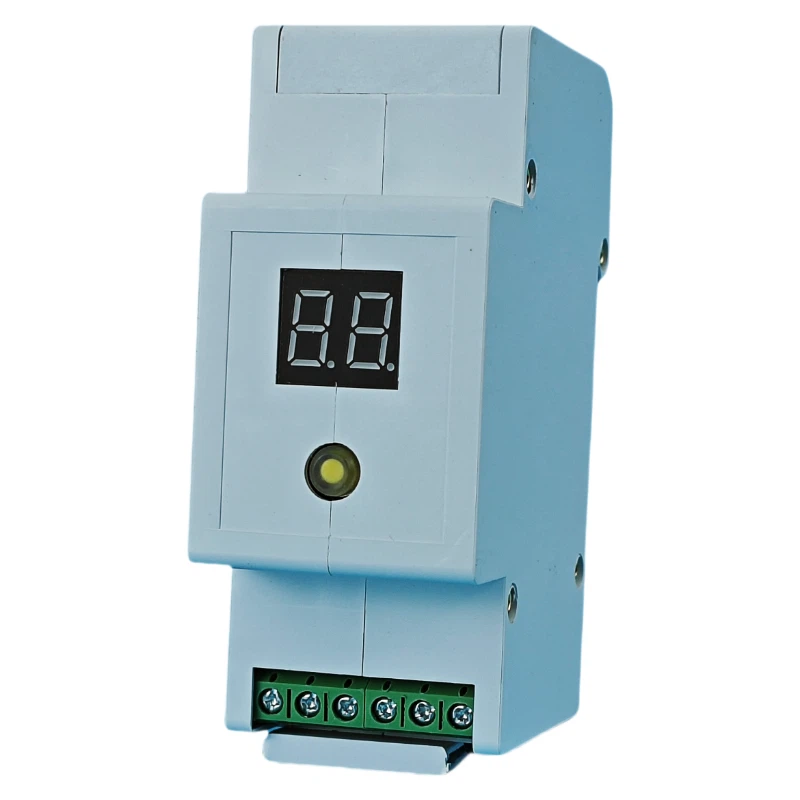
In addition, coastal areas can experience strong sea breezes and thunderstorms that are influenced by the ocean. Our counter can accurately detect the lightning strikes that are associated with these coastal weather systems. It provides data that can be used by coastal communities, shipping industries, and environmental agencies to better understand and prepare for lightning - related hazards.
Desert regions are another interesting case. These areas are known for their extreme heat, low humidity, and occasional dust storms. Our passive lightning counter is built to handle these conditions.
The device has a heat - resistant design. It can operate effectively in high - temperature environments without overheating. The sensors are also protected from dust and sand particles. A special filter system prevents dust from entering the internal components, ensuring the long - term reliability of the counter.
In deserts, lightning strikes can be associated with rare thunderstorms. These storms can bring sudden changes in the weather, including strong winds and flash floods. Our counter can detect these lightning events and provide early warnings to local authorities and residents.
One of the great things about our passive lightning counter is its flexibility. It can be easily customized to meet the specific needs of different geographical locations. Whether it's adjusting the sensitivity of the sensors, changing the data storage capacity, or modifying the housing design, we can tailor the device to fit the requirements of any region.
If you're interested in learning more about our Passive Lightning Counter Module and how it can adapt to your specific geographical location, we'd love to hear from you. We're always ready to have a chat about your needs and provide you with the best solutions. Whether you're a researcher, a local government agency, or a business looking to protect your assets from lightning, our passive lightning counter can be a valuable addition to your toolkit. So, don't hesitate to reach out and start a conversation about procurement and how we can work together to keep you safe from lightning hazards.
References
- "Lightning Physics and Effects" by Martin A. Uman
- "Meteorology: Understanding the Atmosphere" by C. Donald Ahrens