


Can a Passive Lightning Counter be Used in Space - related Research?
In the vast expanse of space research, the quest for understanding celestial phenomena and the behavior of various natural forces is unending. One such area that has gained increasing attention is the potential use of a passive lightning counter in space - related research. As a supplier of Passive Lightning Counter Module, I have witnessed the growing curiosity and exploration in this domain.
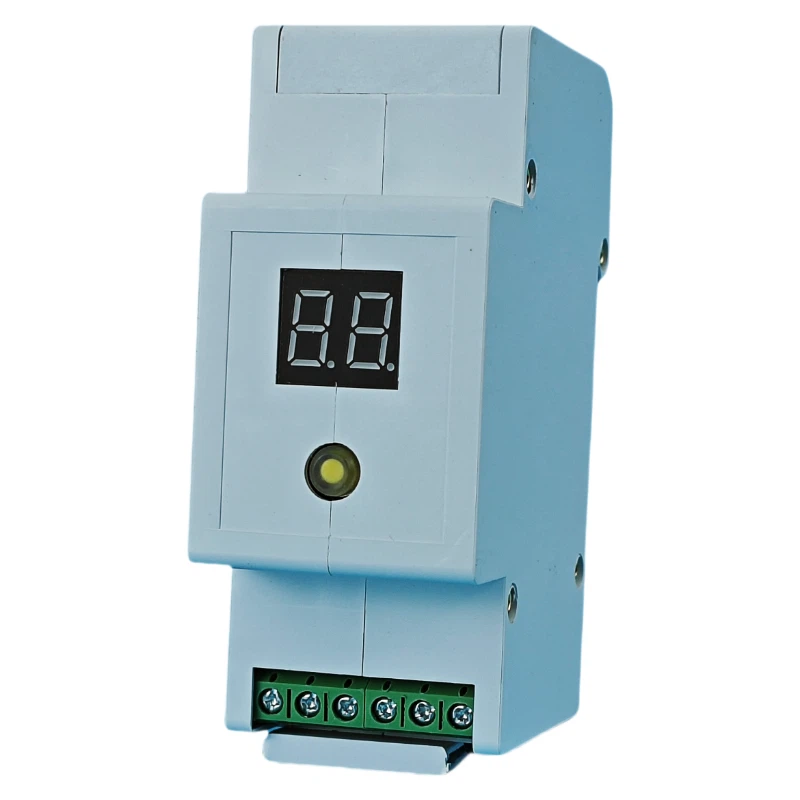
Understanding Passive Lightning Counters
Before delving into the application of passive lightning counters in space research, it is essential to understand what they are. A passive lightning counter is a device designed to detect and record lightning strikes without actively emitting any signals. It operates by sensing the electromagnetic radiation generated by lightning discharges. These counters are typically used in terrestrial applications, such as weather monitoring stations, airports, and industrial facilities, to keep track of lightning activity in a particular area.
The basic principle behind a passive lightning counter involves the detection of the radio - frequency (RF) signals produced by lightning. When a lightning bolt occurs, it generates a powerful electromagnetic pulse that can be detected by the counter's antenna. The counter then processes this signal, counts the number of lightning strikes, and may also record additional information such as the intensity and direction of the strike.
Potential Applications in Space - related Research
- Studying Planetary Atmospheres
Many planets in our solar system, such as Jupiter and Saturn, have thick atmospheres with significant lightning activity. By deploying passive lightning counters on space probes or satellites orbiting these planets, scientists can gather valuable data on the frequency, intensity, and distribution of lightning strikes. This information can help in understanding the composition, dynamics, and energy transfer processes within these planetary atmospheres.
For example, the study of lightning on Jupiter can provide insights into the planet's internal structure and the circulation patterns in its atmosphere. The intense lightning activity on Jupiter is believed to be related to the planet's powerful convective storms, and by analyzing the lightning data, scientists can better understand the mechanisms driving these storms. - Monitoring Earth's Upper Atmosphere
Space - based passive lightning counters can also be used to monitor lightning activity in Earth's upper atmosphere. The upper atmosphere, including the ionosphere, plays a crucial role in the Earth's electromagnetic environment and communication systems. Lightning strikes in the upper atmosphere can produce transient luminous events (TLEs), such as sprites, elves, and jets. These TLEs are not well - understood, and passive lightning counters can help in detecting and studying them.
By continuously monitoring the lightning activity in the upper atmosphere, scientists can gain a better understanding of the coupling between the lower and upper atmospheres, as well as the impact of lightning on the ionospheric plasma. This information is important for improving the reliability of communication and navigation systems that rely on the ionosphere. - Searching for Exoplanetary Lightning
The discovery of thousands of exoplanets in recent years has opened up the possibility of studying lightning on other worlds. Passive lightning counters could be incorporated into future exoplanet - hunting missions to detect and analyze lightning activity on these distant planets. The presence of lightning on an exoplanet could provide clues about its atmosphere, climate, and the potential for habitability.
For instance, if lightning is detected on an exoplanet, it could indicate the presence of a dynamic atmosphere with active weather systems. This, in turn, could suggest the existence of a water cycle and the possibility of liquid water on the planet's surface, which are important factors for the development of life.
Challenges and Considerations
While the potential applications of passive lightning counters in space - related research are exciting, there are several challenges and considerations that need to be addressed.
- Radiation and Space Environment
Space is a harsh environment filled with high - energy radiation, including cosmic rays and solar flares. These radiation sources can cause damage to the electronic components of the passive lightning counter, leading to malfunctions or false readings. Therefore, the counter needs to be designed with radiation - hardened components and shielding to ensure its reliability in space. - Antenna Design and Sensitivity
In space, the electromagnetic environment is different from that on Earth. The antenna of the passive lightning counter needs to be designed to operate effectively in the space environment, taking into account factors such as the frequency range of the lightning signals, the background noise level, and the orientation of the antenna. Additionally, the counter needs to have high sensitivity to detect the weak lightning signals from distant planets or in the upper atmosphere. - Data Transmission and Processing
Once the passive lightning counter has collected the data, it needs to be transmitted back to Earth for analysis. This requires a reliable communication link between the space - based counter and the ground station. Moreover, the large amount of data generated by the counter needs to be processed efficiently to extract meaningful information.
Our Role as a Supplier
As a supplier of Passive Lightning Counter Module, we are committed to addressing these challenges and providing high - quality products for space - related research. Our passive lightning counter modules are designed with state - of - the - art technology and radiation - hardened components to ensure their reliability in the harsh space environment.
We work closely with scientists and researchers in the space community to understand their specific requirements and customize our products accordingly. Our team of engineers has extensive experience in antenna design and signal processing, allowing us to optimize the performance of our passive lightning counters for space applications.
In addition to providing the hardware, we also offer technical support and training to our customers. We understand that the successful implementation of passive lightning counters in space research requires not only high - quality products but also a good understanding of how to use them effectively. Therefore, we are dedicated to helping our customers make the most of our products in their research projects.
Conclusion
The use of passive lightning counters in space - related research holds great promise. It can provide valuable insights into the atmospheres of planets within our solar system, Earth's upper atmosphere, and even exoplanets. While there are challenges to overcome, with the right technology and expertise, these counters can become an important tool in the field of space research.
If you are involved in space - related research and are interested in using our passive lightning counter modules, we invite you to contact us for further discussion. We are eager to collaborate with you and contribute to the advancement of space science.
References
- Yair, Y., & Pasko, V. P. (2012). Transient luminous events in the atmosphere. Physics Reports, 512(5), 291 - 373.
- Williams, E. R. (2005). The global electrical circuit and lightning. Reports on Progress in Physics, 68(4), 1393 - 1434.
- Gurnett, D. A., & Goertz, C. K. (1981). Lightning on Jupiter. Journal of Geophysical Research: Space Physics, 86(A12), 11007 - 11014.