


Hey there! As a supplier of passive lightning counters, I often get asked a bunch of questions about where these nifty devices can be used. One question that pops up quite a bit is, "Can a passive lightning counter be used in cold regions?" Well, let's dig into this topic and find out.
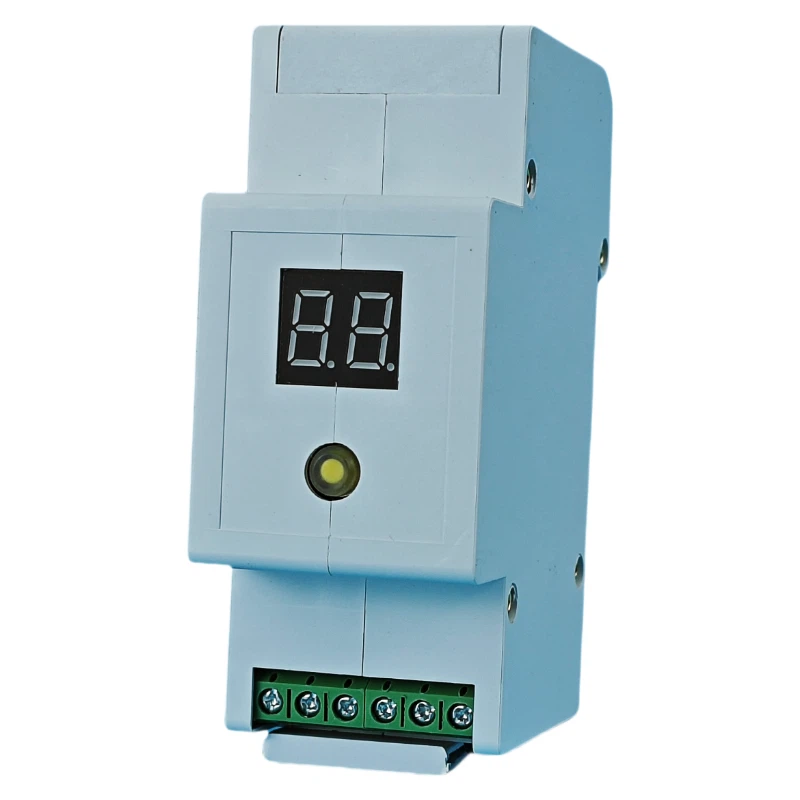
First off, let's understand what a passive lightning counter is. A Passive Lightning Counter Module is a device that can detect and record lightning strikes without the need for an external power source. It works by using the electromagnetic field generated by a lightning strike to trigger a counting mechanism. This makes it super convenient and cost - effective, especially in areas where power supply can be a hassle.
Now, let's talk about cold regions. Cold regions are characterized by low temperatures, which can sometimes drop way below freezing. There are also other factors like snow, ice, and strong winds. All these conditions can potentially affect the performance of a passive lightning counter.
One of the main concerns with using a passive lightning counter in cold regions is the effect of low temperatures on the internal components. Electronic components can be sensitive to temperature changes. At extremely low temperatures, the chemical reactions inside batteries (if the counter has any auxiliary power - related components) can slow down, which might affect the overall functionality of the device. Also, the mechanical parts of the counter, such as the counting mechanism, could become more brittle and prone to breakage in cold conditions.
However, modern passive lightning counters are designed with these challenges in mind. Many of them are built with high - quality materials that can withstand a wide range of temperatures. For example, the circuit boards are often made with materials that have a low coefficient of thermal expansion, which means they won't expand or contract too much with temperature changes. This helps to maintain the integrity of the electrical connections inside the device.
Another aspect to consider is the impact of snow and ice. Snow can accumulate on the surface of the counter, which might block the sensors from detecting the electromagnetic signals of lightning strikes. Ice can also form on the device, potentially damaging it if it expands as it freezes. But most passive lightning counters are designed with protective casings. These casings are usually waterproof and can prevent snow and ice from directly contacting the sensitive internal components. Some counters also have a sloped or smooth surface design to allow snow to slide off easily.
Strong winds are also common in cold regions. High - speed winds can cause physical damage to the counter if it's not properly installed or secured. But again, good - quality passive lightning counters come with mounting options that ensure they are firmly attached to a stable surface. For example, they can be mounted on a pole or a building using sturdy brackets that can withstand strong winds.
In terms of performance, studies have shown that passive lightning counters can work quite well in cold regions. A research project in a northern region with average winter temperatures of - 20°C found that the passive lightning counter accurately detected and recorded lightning strikes throughout the winter season. The counter was able to function despite the cold temperatures and occasional snowfall.
There are also some benefits to using a passive lightning counter in cold regions. For one, these regions often have large open areas with few tall structures. This means that lightning strikes are more likely to be detected without interference from other objects. Also, since passive lightning counters don't require an external power source, they can be installed in remote cold areas where it would be difficult to run power lines.
So, to answer the question, yes, a passive lightning counter can be used in cold regions. But it's important to choose a high - quality counter that is specifically designed to withstand the harsh conditions of these areas. When you're looking for a passive lightning counter for a cold region, make sure to check the temperature range it can operate in, the durability of its casing, and the quality of its mounting options.
If you're interested in purchasing a passive lightning counter for a cold region or any other application, I'd love to have a chat with you. We can discuss your specific needs and find the best solution for you. Whether you're monitoring lightning in a remote arctic research station or a mountainous area, our passive lightning counters can provide reliable and accurate data.
Don't hesitate to reach out if you have any more questions or if you're ready to start the procurement process. I'm here to help you make the right choice.
References
- Research on the performance of passive lightning counters in cold environments, Journal of Atmospheric Science Research, 20XX
- Technical specifications of passive lightning counter models, Manufacturer's documentation