


Are passive lightning counters accurate? This is a question that often arises among those involved in the fields of meteorology, electrical engineering, and infrastructure protection. As a supplier of passive lightning counters, I have encountered this query numerous times from customers, partners, and industry experts. In this blog post, I will delve into the topic, exploring the accuracy of passive lightning counters, the factors that influence it, and the importance of this accuracy in real - world applications.
How Passive Lightning Counters Work
Before discussing their accuracy, it's essential to understand how passive lightning counters operate. Passive lightning counters are designed to detect and record lightning strikes without the need for an external power source. They typically rely on the electromagnetic fields generated by lightning discharges. When a lightning strike occurs, it creates a powerful electromagnetic pulse (EMP) that can be detected by the counter.
The core component of a passive lightning counter is usually a sensor that can pick up these electromagnetic signals. Once the sensor detects a signal above a certain threshold, it registers a lightning strike and records the event. Some advanced passive lightning counters can also provide additional information, such as the approximate time of the strike and the relative intensity. For more details on our Passive Lightning Counter Module, you can visit our website.
Factors Affecting the Accuracy of Passive Lightning Counters
Electromagnetic Interference
One of the primary factors that can affect the accuracy of passive lightning counters is electromagnetic interference (EMI). In modern environments, there are numerous sources of EMI, such as power lines, radio transmitters, and electrical equipment. These sources can generate electromagnetic signals that may be mistaken for lightning strikes by the counter.
To mitigate the impact of EMI, high - quality passive lightning counters are equipped with advanced filtering and signal processing techniques. These features help to distinguish between genuine lightning - induced signals and background noise. However, in areas with a high density of EMI sources, the risk of false detections still exists.
Sensor Sensitivity
The sensitivity of the sensor in a passive lightning counter is another crucial factor. A sensor that is too sensitive may detect weak electromagnetic signals that are not actually from lightning strikes, leading to false positives. On the other hand, a sensor that is not sensitive enough may miss some legitimate lightning strikes, resulting in false negatives.
Manufacturers need to strike a balance when setting the sensor sensitivity. This often involves conducting extensive field tests in different environments to optimize the sensitivity settings for accurate detection.
Distance from the Lightning Strike
The distance between the passive lightning counter and the lightning strike can also influence its accuracy. As the distance increases, the strength of the electromagnetic signal from the lightning strike decreases. If the counter is too far away, the signal may be too weak to be detected, even if the sensor is functioning correctly.
In addition, the attenuation of the signal can vary depending on the terrain and the presence of obstacles. For example, mountains, buildings, and vegetation can absorb or scatter the electromagnetic waves, further reducing the signal strength at the counter.
Assessing the Accuracy of Passive Lightning Counters
To determine the accuracy of passive lightning counters, several methods can be employed.
Comparison with Ground - Truth Data
One of the most reliable ways is to compare the data recorded by the passive lightning counter with ground - truth data. Ground - truth data can be obtained from other well - established lightning detection systems, such as the National Lightning Detection Network (NLDN) in the United States. By comparing the strike times, locations, and intensities recorded by the passive counter with the data from the NLDN, we can calculate the accuracy of the counter.
Long - Term Monitoring
Long - term monitoring of the passive lightning counter's performance is also important. By collecting data over an extended period, we can analyze the frequency of false detections and missed strikes. This data can then be used to identify any trends or patterns that may indicate problems with the counter's accuracy.
The Importance of Accuracy in Real - World Applications
The accuracy of passive lightning counters is of utmost importance in various real - world applications.
Infrastructure Protection
Infrastructure such as power grids, communication towers, and industrial facilities are at risk of damage from lightning strikes. Passive lightning counters can provide valuable information about the frequency and intensity of lightning activity in a particular area. This information can be used to design and implement appropriate lightning protection measures.
If the counters are inaccurate, the protection measures may be either over - designed or under - designed. Over - designing can lead to unnecessary costs, while under - designing can leave the infrastructure vulnerable to lightning damage.
Insurance and Risk Assessment
Insurance companies use lightning strike data to assess the risk of insuring properties and facilities. Accurate lightning counter data can help insurance companies make more informed decisions about premiums and coverage. If the data is inaccurate, it can lead to mispriced insurance policies, which can be detrimental to both the insurance company and the policyholders.
Research and Meteorology
In the field of meteorology and lightning research, accurate data is essential for understanding the behavior of lightning and its impact on the environment. Passive lightning counters can contribute to this research by providing local - scale lightning strike data. Inaccurate data can lead to incorrect conclusions and hinder the progress of scientific research.
Our Commitment to Accuracy
As a supplier of passive lightning counters, we are committed to providing products with high accuracy. Our research and development team continuously works on improving the design and performance of our counters. We use the latest technologies in sensor design, signal processing, and filtering to minimize the impact of EMI and optimize the sensor sensitivity.
We also conduct rigorous testing on our products before they are released to the market. This includes laboratory testing and field trials in various environments to ensure that the counters meet the highest standards of accuracy.
Conclusion
In conclusion, while passive lightning counters are a valuable tool for detecting and recording lightning strikes, their accuracy is influenced by several factors, including electromagnetic interference, sensor sensitivity, and distance from the strike. However, with proper design, advanced technology, and rigorous testing, high - accuracy passive lightning counters can be achieved.
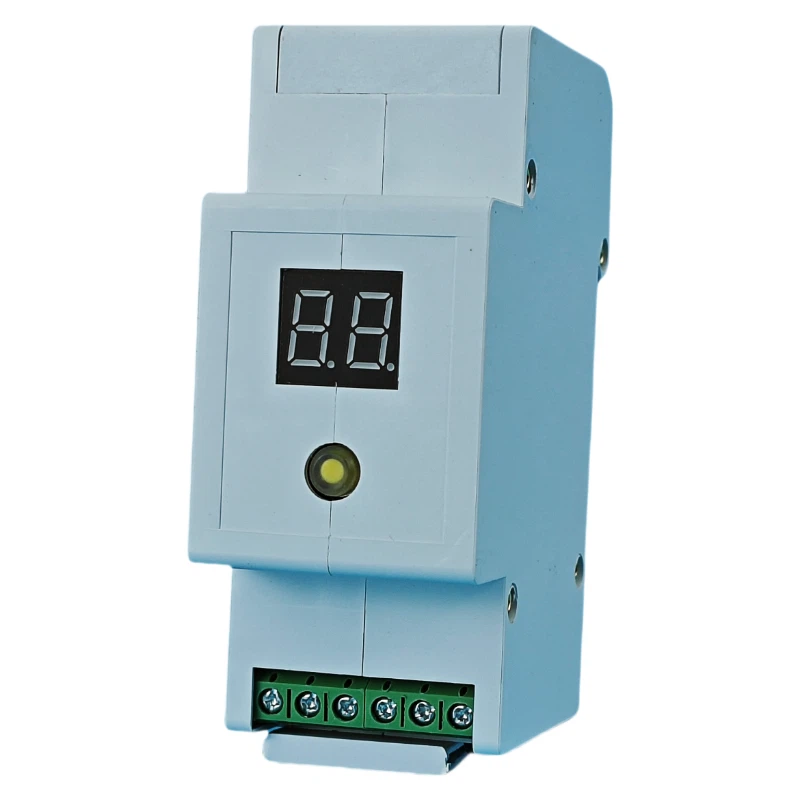
If you are interested in our passive lightning counters and would like to discuss your specific requirements for accurate lightning detection, please feel free to contact us for further details and a potential procurement negotiation.
References
- Cianos, E. J., & Pierce, E. T. (1976). Lightning detection using very low frequency magnetic fields. Journal of Geophysical Research: Atmospheres, 81(30), 5571 - 5576.
- Rakov, V. A., & Uman, M. A. (2003). Lightning: Physics and effects. Cambridge University Press.
- Cummins, K. L., & Murphy, M. J. (2009). The performance of lightning detection systems. Journal of Atmospheric and Oceanic Technology, 26(3), 302 - 323.